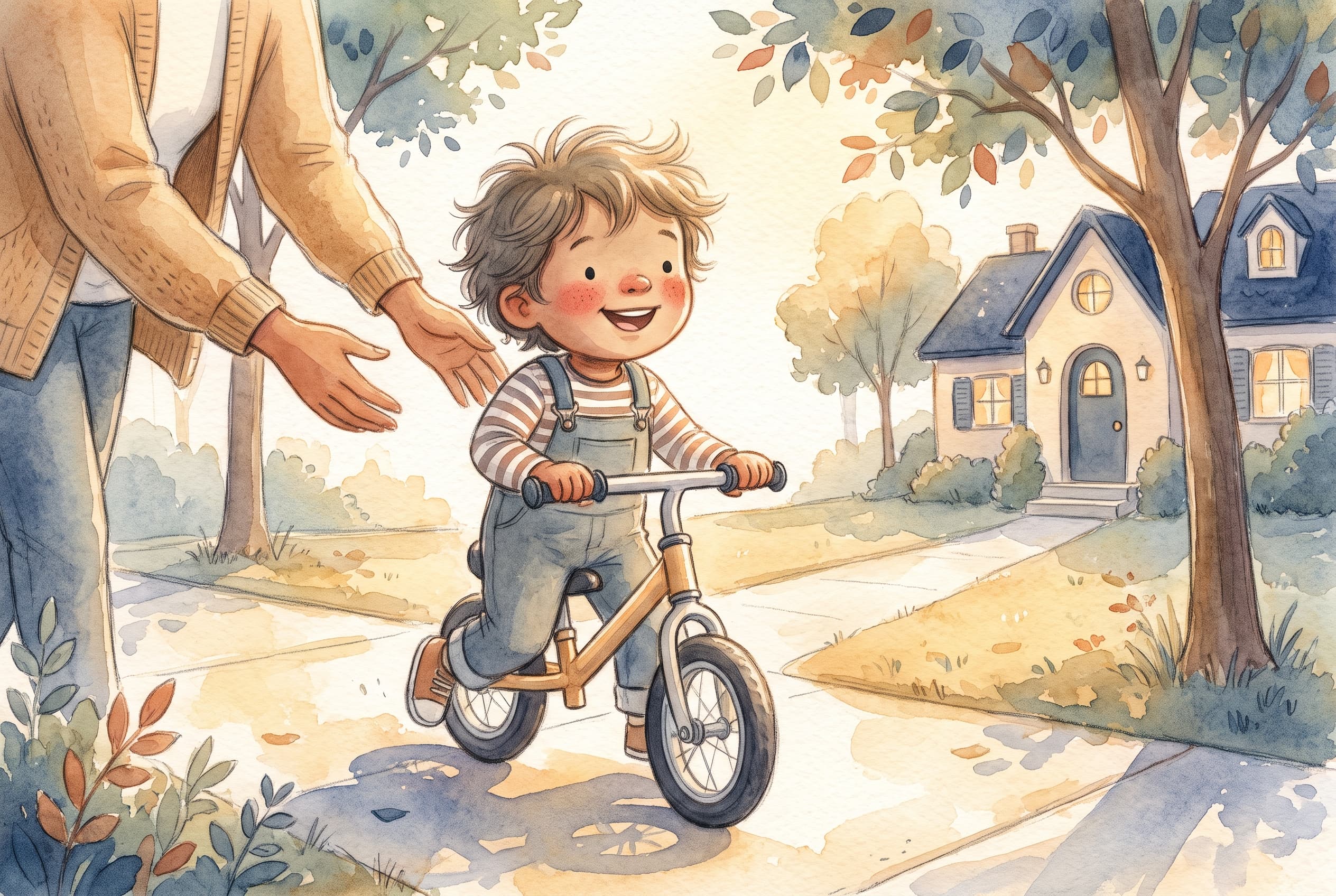
There's a specific kind of magic in the moment your kid pedals away on two wheels for the first time — wobbly, grinning, suddenly free. But getting there can feel mysterious if you're picturing the old routine of training wheels, scraped knees, and a lot of "just keep pedaling!" The good news: modern methods to teach a child to ride a bike are calmer, faster, and skip the training wheels entirely. This guide walks you through what actually works, at what age, and how to keep the whole thing joyful instead of stressful.
Why balance comes before pedaling
Training wheels teach the one skill riding a bike doesn't actually use: pedaling while sitting perfectly upright. They let a kid stay vertical without ever learning to balance — which is the real trick. When the wheels finally come off, your child has to start balance from scratch, often after building a habit of leaning on those little side wheels.
The faster, gentler approach flips the order: teach balance first, pedaling second. Kids learn to glide, feel how a bike stays upright through gentle steering, and only add pedals once staying balanced feels natural. Most children who learn this way skip the meltdown phase entirely.
Is your child ready? Signs and ages
There's no universal "right age." Some kids are gliding at 3 on a balance bike; plenty of confident riders start at 6 or 7. Readiness is more about the child than the calendar.
- They can walk and run comfortably and enjoy movement games
- They can follow a two-step instruction like "look ahead and squeeze the brake"
- They show interest — pointing at other kids on bikes, asking to try
- They can reach the ground with both feet flat while sitting on the seat
Whatever bike you use, drop the seat so your child can sit and place both feet flat on the ground. Being able to catch themselves instantly removes most of the fear — and fear, not skill, is usually what stalls progress.
The step-by-step method to teach a child to ride a bike
Here's the sequence that works for most families. Move to the next step only when the current one feels easy and fun — rushing is what causes tears.
- Take the pedals off (or use a balance bike). Let your child walk the bike around while sitting on the seat, feet on the ground.
- Practice gliding. On a gentle, slight downhill, have them push off and lift their feet, coasting as far as they can. Cheer for longer and longer glides.
- Add steering. Set up soft targets — chalk circles, cones — and let them weave. This teaches that steering keeps them upright.
- Reattach the pedals. Show them the "pedal-ready" position: one pedal up at about 2 o'clock so they can push down to start.
- Practice the launch. Have them look ahead (not down), push off with a glide, then find the pedals and push.
- Let go — literally. Support the seat lightly, then release without announcing it. Run alongside, then peel away.
How to help without hovering
Resist the urge to grab the handlebars. Steering is how a bike balances, so holding the bars actually makes balancing harder. If you need to support, hold the child's torso or the back of the seat — not the bike's steering.
Keep your instructions short and positive. "Eyes up the path" works better than a list of corrections. Kids do what you point their attention toward, so aim it forward, not down at the front wheel.
“The moment you stop trying to keep them upright and let them figure it out — that's usually the moment they ride.”
— A dad who taught three kids in one summer
Handling the wobbles, falls, and frustration
Falls will happen. Helmet on, always, and closed-toe shoes. Long sleeves and pants on cool days save a lot of scraped elbows and tears. Choose a forgiving surface — grass with a slight slope, or a smooth, empty parking lot — over gravel or busy sidewalks.
When frustration builds, stop before the meltdown, not after. End every session on a small win, even if that win is just three good glides. Ten focused, happy minutes beats an hour of pushing through tears. This is a milestone, not a deadline — some kids get it in an afternoon, others need two weeks of short tries.
Celebrating the milestone
The first solo ride is a genuine rite of passage, right up there with the first day of school and losing a first tooth. Mark it. Take the wobbly video, let them ride to grandma's to show off, or plan a little "bike parade" around the block.
One keepsake families love is turning the achievement into a story where their child is the hero — bravery, balance, and all. A personalized adventure story from Hello Storybook can put your child right on the page, pedaling past the wobbles and into their first big ride. It's a lovely way to make a fleeting milestone something they'll want read at bedtime for years. You can peek at sample books to see how it works before you build one.
A quick gear checklist
- A well-fitted helmet (sits level, snug chin strap)
- A bike sized so both feet reach the ground when seated
- A wrench to remove pedals and lower the seat
- Closed-toe shoes and, ideally, long sleeves for early tries
- A calm, open, low-traffic space with a gentle slope
Key takeaways
- Skip training wheels — teach balance first by gliding, then add pedals once staying upright feels natural.
- Lower the seat so both feet reach the ground; feeling secure removes most of the fear.
- Support your child's torso, never the handlebars, and keep their eyes looking forward down the path.
- End every practice on a small win and treat setbacks as part of the process, not failure.
Frequently asked questions
What is the best age to teach a child to ride a bike?+
Most children are ready between ages 3 and 7, but readiness matters more than age. If your child can walk and run confidently, follow simple two-step instructions, and reach the ground with both feet while seated, they're ready to start with balance and gliding.
How long does it take to teach a child to ride a bike without training wheels?+
Using the balance-first method — gliding before pedaling — many kids ride within one to three sessions. Some get it in a single afternoon, while others need a couple of weeks of short, happy practices. Ending each session before frustration builds keeps progress steady.
Should I use a balance bike or take the pedals off a regular bike?+
Both work well. A balance bike is ideal for toddlers and younger kids, while removing the pedals from a properly sized pedal bike is a great option for older children — it lets them practice gliding, then reattach the pedals once balance clicks.
Written by The Hello Storybook Team, Parents, writers & storytellers.
← All stories