Potty training has a reputation for being a battle of wills, but most of the stress comes from a mismatch between what we expect and where our child actually is. The good news: potty training without the power struggle is absolutely possible when you follow your child's readiness, hand them real control, and stay boring about the messes. This guide walks you through the signs to watch for, a gentle step-by-step approach, and what to do when things slide backward — all without bribes, charts, or tears (yours included).
Why power struggles happen in the first place
Using the toilet is one of the very few things a toddler genuinely controls. They can't control bedtime, mealtimes, or where the car goes — but they can decide whether to release into a potty. When we push too hard, we accidentally turn a body skill into a contest of autonomy. The child digs in, we escalate, and suddenly a developmental milestone feels like a hostage negotiation.
The fix isn't a clever trick. It's removing pressure so the natural drive toward independence can do the work. Your job is to set up the environment and stay calm — not to win.
Look for readiness, not a calendar date
There is no magic age. Most children show readiness somewhere between 22 months and 3.5 years, and starting before the signs appear is the single biggest cause of drawn-out struggles. Watch for a cluster of these, not just one:
- Staying dry for two or more hours, or waking dry from naps
- Showing awareness — pausing, hiding, or telling you while going in the diaper
- Curiosity about the toilet or wanting to copy family members
- Being able to pull pants up and down with some help
- Following simple two-step directions
- Disliking the feeling of a wet or dirty diaper
If you see three or four of these signs consistently, you have a green light. If you don't, waiting two or three weeks usually saves you a month of frustration. Earlier is not better — ready is better.
A gentle 5-step plan that keeps control with your child
Once the signs are there, structure helps everyone relax. The key is that each step offers your child a choice, so cooperation feels like their idea.
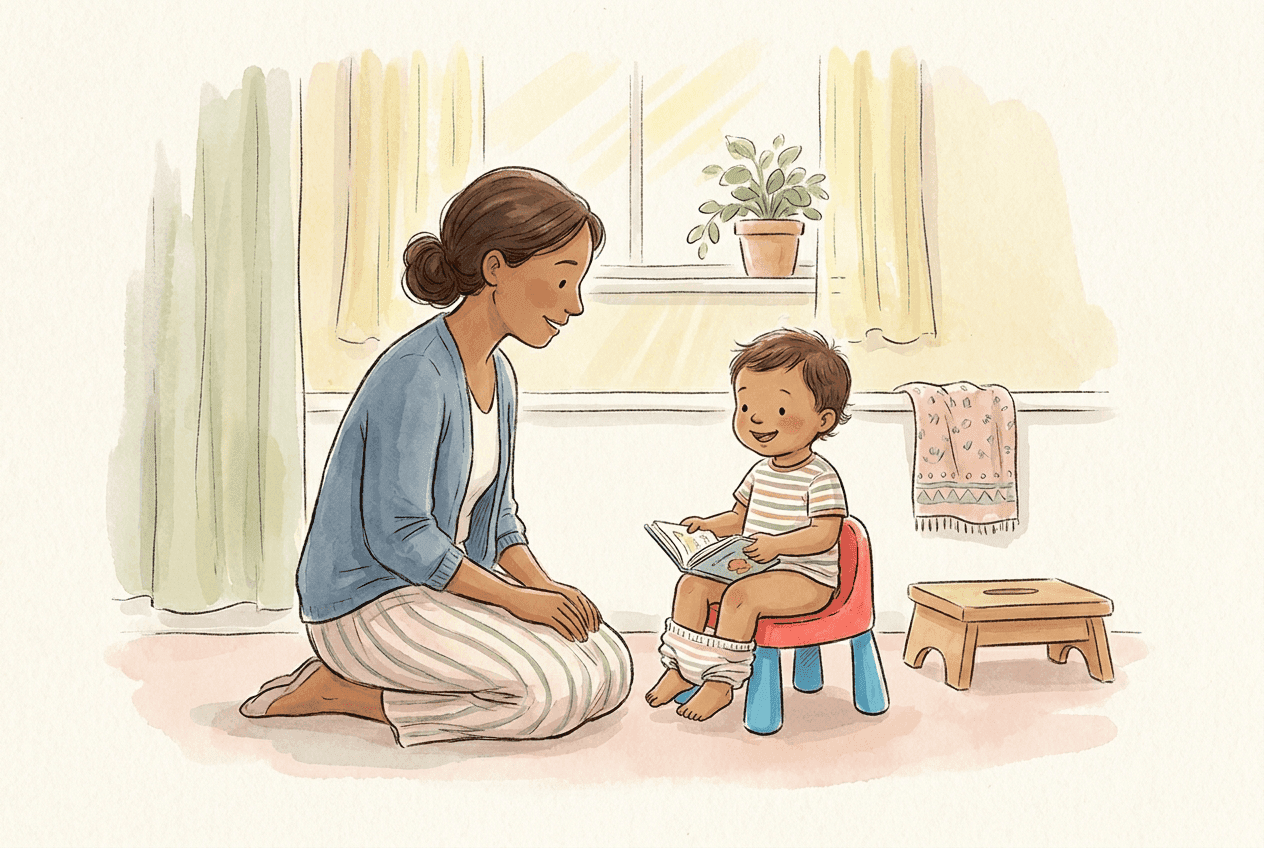
- Introduce the potty with zero pressure. Let it live in the bathroom for a week. Read about it, sit on it clothed, make it familiar and unremarkable.
- Switch to underwear (or go bare-bottomed at home for a few days). The feedback of wetness teaches faster than any pull-up. Frame it as exciting, not as a test.
- Offer regular, low-key invitations: 'The potty's there whenever your body needs it.' Avoid the constant 'Do you need to go?' which invites a reflexive no.
- Stay neutral about misses. Mop up together matter-of-factly. No sighs, no disappointment — accidents are data, not failures.
- Celebrate effort calmly. A warm 'You listened to your body!' beats a parade. Over-the-top praise can backfire and add pressure.
What to skip
Some popular tactics quietly fuel the power struggle. You can drop these without guilt:
- Sticker charts and candy bribes — they shift motivation outside the child and stall once the novelty fades.
- Forcing a child to sit until they 'produce' — this creates withholding and fear.
- Punishment or shame for accidents — it reliably increases hiding and regressions.
- Comparing to siblings or peers — every child's nervous system runs on its own clock.
“You cannot make a child eat, sleep, or use the toilet. You can only make those things appealing and safe — then get out of the way.”
— A pediatric occupational therapist's reframe worth taping to the bathroom mirror
Handling regressions and refusals
Almost every child backslides at some point — after a new baby, a move, an illness, or starting daycare. Regression is communication, not defiance. Respond by lowering the stakes again: more invitations, less commentary, and extra connection elsewhere in the day. If your child flatly refuses for more than a week or seems fearful, it's completely fine to pause for a couple of weeks and try again. Backing off is a strategy, not a surrender.
Constipation is a hidden culprit behind many 'sudden' refusals — a hard, painful poop can scare a child off the toilet for weeks. Plenty of water, fruit, and movement keep things comfortable, and a doctor can help if you suspect withholding.
Make the toilet feel like the child's own story
Children process big transitions through narrative — it's why bedtime stories and pretend play work so well. Talking about the milestone as part of their own growing-up story turns an anxious unknown into something they recognize and feel proud of. The same principle that helps with a new sibling or the first day of school applies here: when a child sees themselves succeeding in a story, they rehearse the confidence to do it in real life. You can also browse our sample books to see how seeing yourself as the hero changes how a child approaches a challenge.
Protect the relationship above the result
The deadline you feel — preschool cutoffs, a relative's raised eyebrow — is rarely your child's deadline. Within a year or two, no one will remember whether your child trained at 2 or 3. They will remember whether bathrooms felt safe and whether you stayed on their team. Keep the long view: a calm, trusting relationship is the foundation that makes every milestone, including this one, easier.
Key takeaways
- Start when your child shows three or four readiness signs, not at a fixed age.
- Hand control back: offer invitations and choices instead of demands and constant questions.
- Treat accidents and regressions as neutral information, never as failures to punish.
- Use stories and connection to make the toilet feel like part of your child's proud growing-up journey.
Frequently asked questions
At what age should I start potty training?+
There is no universal age. Most children become ready between 22 months and 3.5 years. Look for a cluster of readiness signs — staying dry for two hours, showing awareness, curiosity about the toilet, and being able to follow simple directions — rather than starting on a fixed date.
How do I stop potty training from becoming a power struggle?+
Remove pressure and give your child control. Offer relaxed invitations instead of constant questions, stay completely neutral about accidents, skip bribes and forced sitting, and be willing to pause for a week or two if your child resists. Cooperation grows when the child feels it's their choice.
My child was trained and now has accidents again — what should I do?+
Regression is normal, especially after a new baby, move, illness, or starting daycare, and it's often communication rather than defiance. Lower the stakes with more invitations and less commentary, rule out constipation, add extra connection, and if needed, take a short break before trying again.
Written by The Hello Storybook Team, Parents, writers & storytellers.
← All stories