Useimmat vanhemmat tuntevat tutkimustulokset: lukemisesta nauttivat lapset pärjäävät koulussa paremmin ja kantavat lukuinnon mukanaan aikuisuuteen. Vaikeampi kysymys on *miten* sinne päästään — varsinkin kun ruutu on aina helpolla ja iltatoimet meluisat. Hyvä uutinen on, että lukuinto syntyy harvoin kirjaimia pänttäämällä. Se syntyy pienistä, ruuduttomista hetkistä, jotka saavat kirjat tuntumaan lämpimiltä, hauskoilta ja sellaisilta, joiden ääreen haluaa palata. Alle olen koonnut konkreettista tekemistä, jonka voit sujauttaa tavallisiin päiviin, järjestettynä niin että löydät lapsesi iän ja mielialan mukaisen. Selaa muutamaa esimerkkitarinaa, jos haluat nähdä, miltä vastustamaton ääneen luettava tarina näyttää.
Miksi ruudukkuus painaa enemmän kuin täydelliset kirjat
Et tarvitse kalliita tarvikkeita etkä Pinterest-tason lukunurkkaa. Lukijan kasvattaa toistuva, paineeton kosketus tarinoihin ja niihin ihmisiin, joita lapsi rakastaa. Ruudut eivät ole paha asia, mutta ne syövät helposti sitä hidasta, edestakaista juttelua, joka kasvattaa sanavarastoa ja ymmärrystä. Kuvakirja kutsuu kysymyksiin, taukoihin ja hassuihin ääniin. Tabletti taas ei yleensä jää odottamaan, että lapsi ehtii ihmetellä ääneen.
Jokaisen tässä esitellyn tekemisen tavoite on sama: saada kirjat tuntumaan leikiltä eikä läksyltä. Kun lukeminen yhdistyy läheisyyteen ja hauskuuteen, lapsi tarttuu kirjaan itse — ja juuri siitähän kaikessa on kyse.
Tee ääneen lukemisesta päivän kiintopiste
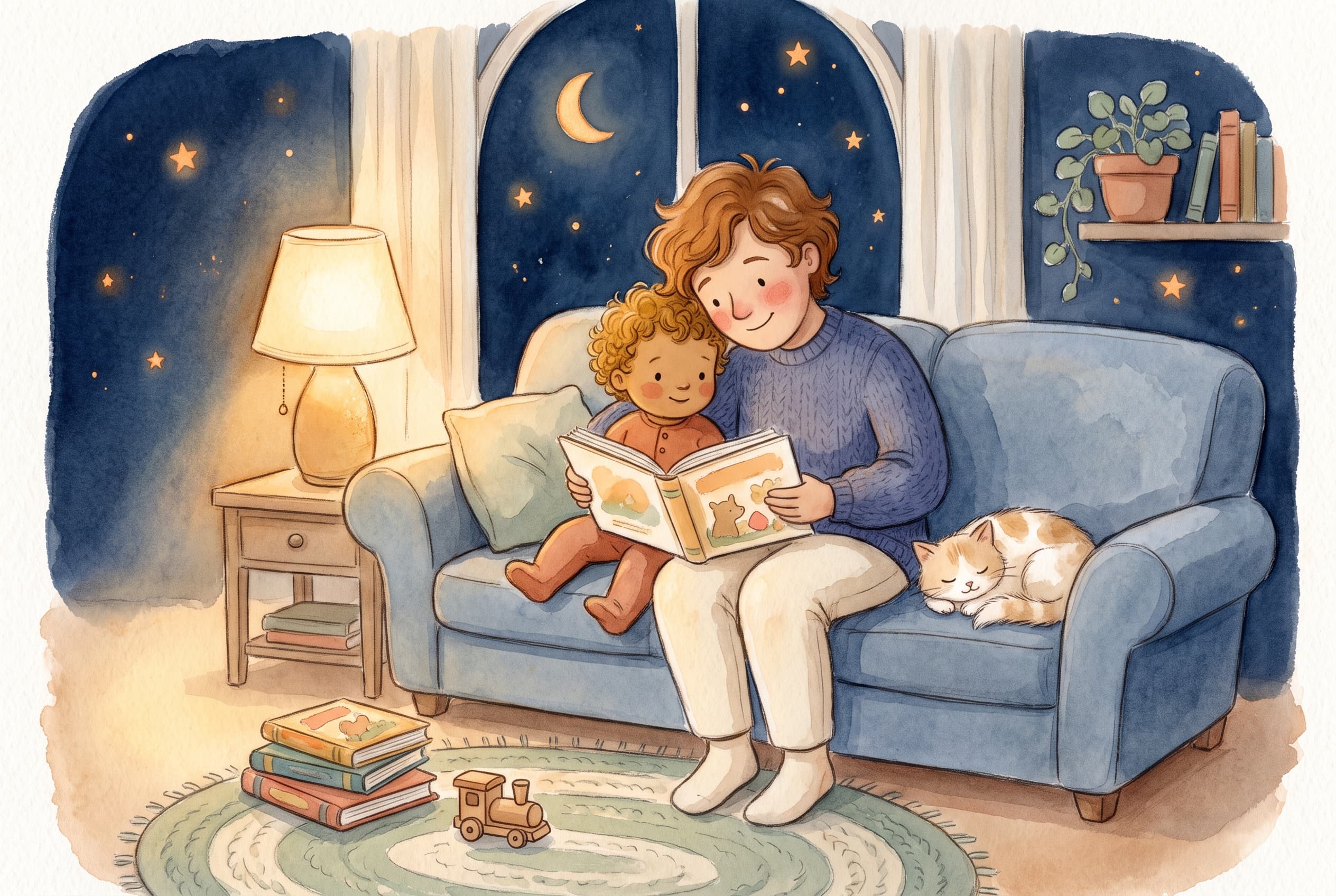
Ääneen lukeminen on kaikkein tuottoisin tapa, ja se toimii vielä pitkään senkin jälkeen kun lapsi osaa lukea itse. Sujuvan, eläytyvän lukemisen kuuleminen opettaa rytmiä, sanoja ja sen, miten tarinat rakentuvat. Valitse ennakoitava hetki — lounaan jälkeen, ennen päiväunia tai nukkumaan mennessä — niin siitä tulee rytmi, josta kenenkään ei tarvitse neuvotella. Muutama vinkki ääneen lukemiseen auttaa pitämään hetken rituaalina eikä pakkopullana.
- Käytä eri ääniä. Murahtava karhu ja vinkuva hiiri saavat lapsen kurottautumaan kohti kirjaa.
- Pysähdy ennen sivunkääntöä ja kysy: "Mitäköhän tässä nyt tapahtuu?"
- Lue suosikit uudelleen ilman huonoa omaatuntoa. Toisto on tapa, jolla pieni lapsi ottaa kielen haltuun.
- Anna lapsen kääntää sivut — se pitää pienet kädet ja tarkkaavaisuuden mukana.
Et tarvitse 45 minuutin lukuhetkeä. Kymmenen keskittynyttä, puhelin poissa vietettyä minuuttia päivässä voittaa satunnaisen maratonin. Juuri säännöllisyys rakentaa tavan.
Tuo tarinat kirjan sivuilta leikkiin
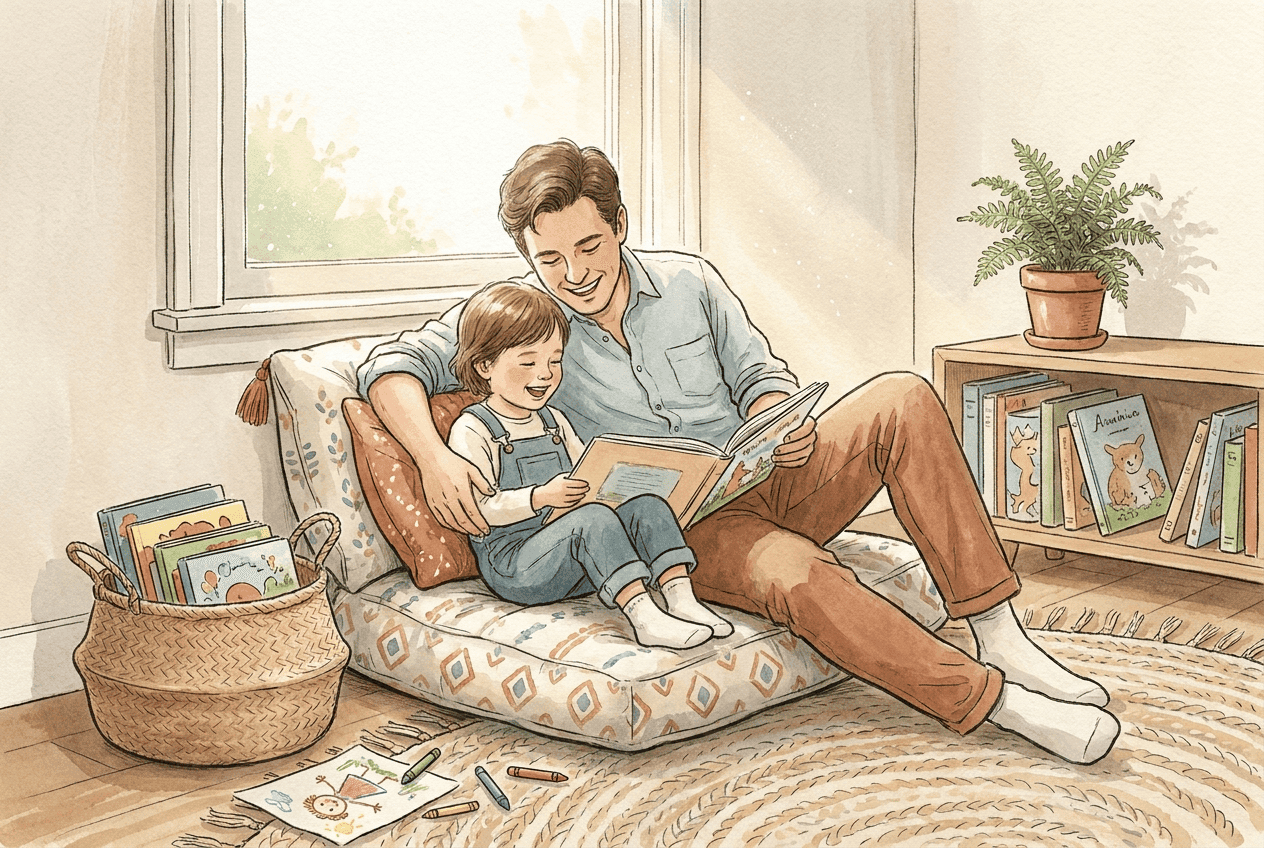
Lapsi ymmärtää tarinoita parhaiten näyttelemällä ne. Käyttäkää lukemisen jälkeen muutama minuutti siihen, että kirjasta tulee leikki. Tämä on erityisen tehokasta 3–6-vuotiailla, jolloin mielikuvitusleikki tekee valtavaa kehitystyötä.
- Näytelkää tarina uudelleen niin, että pehmolelut ovat henkilöhahmoja.
- Rakentakaa kohtaus kirjasta palikoilla, tyynyillä tai keittiön kattiloilla.
- Piirtäkää "mitä tapahtui seuraavaksi" — vaihtoehtoinen loppu, jota kirjailija ei koskaan kirjoittanut.
- Kokatkaa tai askarrelkaa jotain, mitä hahmot söivät tai tekivät.
Tällainen tekeminen opettaa huomaamatta tapahtumien järjestystä, hahmoja sekä syy-seuraussuhteita — luetunymmärtämisen selkärangan — eikä yhtään tehtävämonistetta tarvita.
Anna lapsen ryhtyä tarinankertojaksi
Lukeminen ja tarinointi ovat saman taidon kaksi puolta. Kun lapsi keksii omia tarinoita, hän sisäistää sen, miten kertomus toimii — ja se tekee luetuista kirjoista merkityksellisempiä. Kokeilkaa "tarinanoppia" (piirtäkää kuvia paperikuutioiden sivuille ja heittäkää vihjeeksi) tai kierrosta, jossa jokainen perheenjäsen lisää tarinaan yhden lauseen.
Kaikkein kovimmin uppoavat henkilökohtaiset tarinat. Kerro lapsellesi tarina, jossa *hän* on sankari, joka pelastaa päivän tai löytää kadonneen koiranpennun. Lapsi lumoutuu, kun hän on itse seikkailun keskiössä — sama vaisto tekee seikkailutarinoista ja rohkeustarinoista niin vetäviä tässä iässä.
“Lapsista tulee lukijoita vanhempiensa sylissä.”
— Emilie Buchwald
Rakenna koti, jossa on kirjoja ja vähän ruutuja
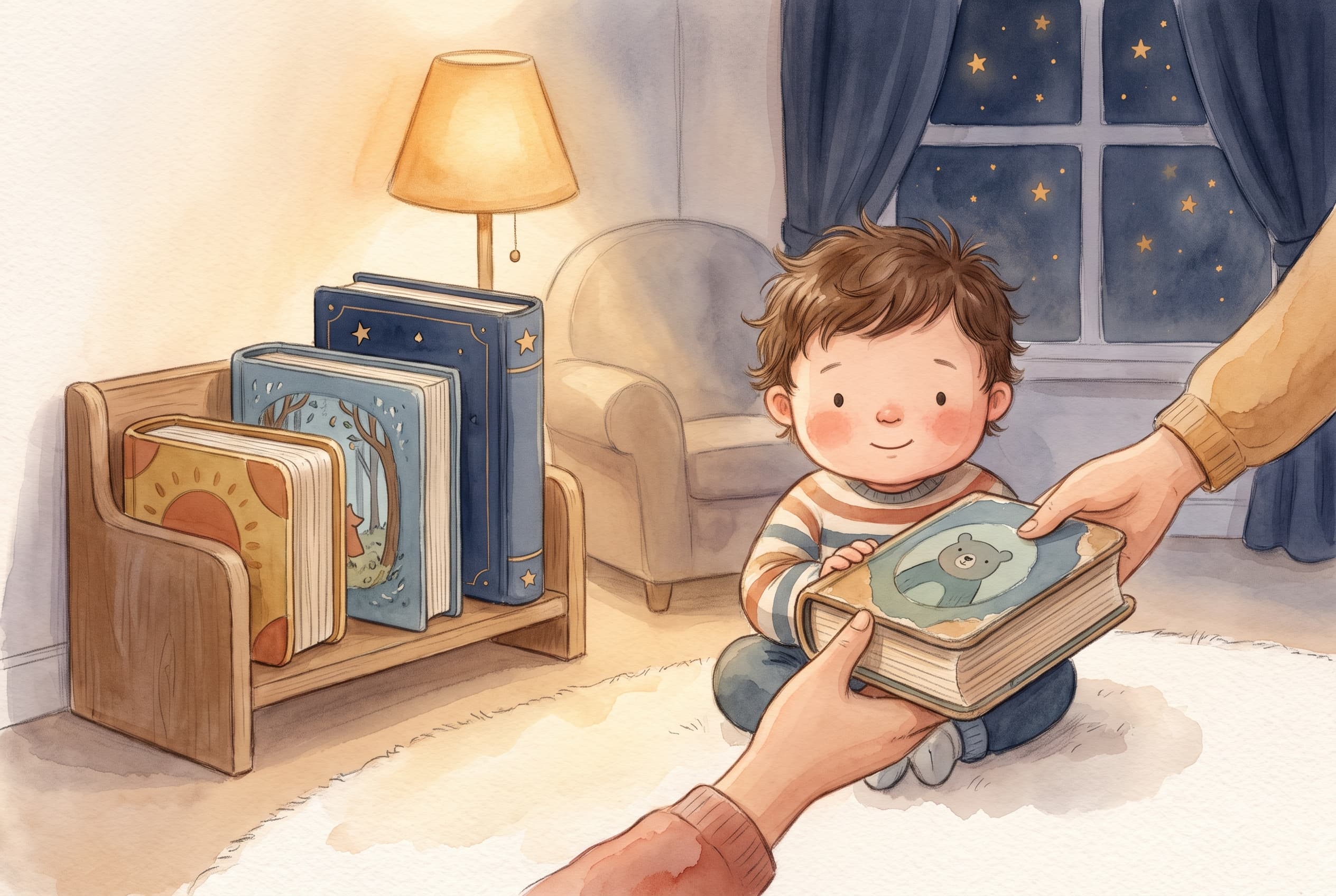
Ympäristö tekee paljon työtä puolestasi. Kun kirjat ovat näkyvillä ja käden ulottuvilla, lapsi tarttuu niihin. Kun ruutu on itsestäänselvä esine sohvapöydällä, hän tarttuu siihen.
- Pidä kori kirjoja jokaisessa huoneessa, jossa lapsi viettää aikaa — ei vain makuuhuoneessa.
- Käännä muutaman kirjan kansi näkyviin; kansi on kutsu, selkämys on seinä.
- Vaihtele valikoimaa niin, että vanhat suosikit tuntuvat taas uusilta.
- Laita pieni lamppu tai taskulamppu sängyn viereen, niin hiljainen lukeminen tuntuu erityiseltä.
- Anna lapsen bongata sinut lukemasta omaa kirjaasi — esimerkki puree paremmin kuin saarna.
Hyödynnä kirjasto ja arjen tekstit
Viikoittainen kirjastoreissu on ilmainen, ruuduton retki, joka antaa lapselle valtaa: hän saa valita. Anna hänen valita kirjoja, jotka vaikuttavat liian helpoilta tai liian kummallisilta — valinnanvapaus ruokkii motivaatiota paljon enemmän kuin sinun tarkkaan mietitty listasi. Monissa kirjastoissa on myös maksuttomia satutuokioita, jotka näyttävät lapselle, että lukeminen on yhteinen, sosiaalinen ilo.
Lukeminen elää myös kirjojen ulkopuolella. Lukekaa ääneen muropaketti, tienviitat, resepti tai kauppalista, jonka teitte yhdessä. Tämä "ympäristön teksti" opettaa lapselle, että kirjaimet kantavat merkitystä kaikkialla — juuri se oivallus, jota alkava lukija tarvitsee.
Sovita tekeminen lapsen ikään
Taapero ja seitsemänvuotias tarvitsevat eri asioita. Tässä nopea opas, jotta vaivannäkösi osuu maaliin:
- 0–2 v: pahvikirjat, nimeämisleikit, runsaasti toistoa, laulut ja lorut.
- 3–5 v: ennakoitavat, riimittelevät tarinat; kirjojen näytteleminen; lukemaan leikkiminen.
- 6–8 v: ääneen luetut lukukirjat, sivujen lukeminen vuorotellen, omien tarinoiden kirjoittaminen.
- 8–10 v: anna lapsen lukea pienemmälle sisarukselle tai lemmikille; perheen kirjajutustelut ruokapöydässä.
Iästä riippumatta seuraa lapsen omaa suuntaa. Hänen kiinnostuksensa — dinosaurukset, jalkapallo, avaruus, keijut — on se sisääntuloväylä. Etsi kirjoja siitä, mitä hän jo rakastaa, niin lukeminen hoituu kuin itsestään.
Kirja hänen nimellään, jota ei malta laskea käsistä
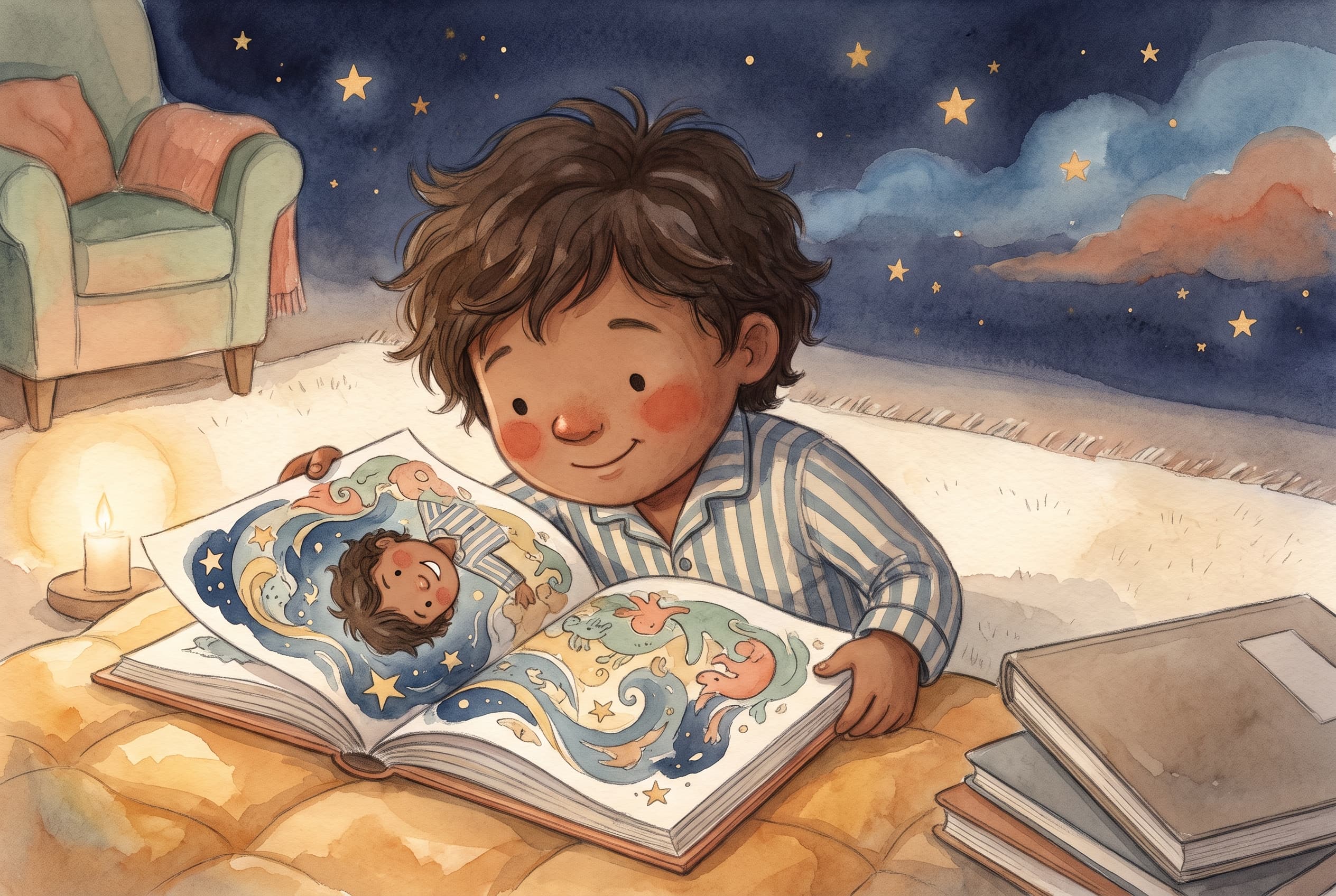
Jos haluat yhden kirjan, joka vetää vastahakoisen lukijan mukaansa nopeasti, tee hänestä päähenkilö. Ei ole sattumaa, että lapsi pyytää samaa tarinaa kahdeskymmenennenkin kerran, kun se kertoo *hänestä* — hän haluaa lukea joka sanan ja kääntää joka sivun. Kuvitettu lastenkirja omalla nimellä toimii mainiosti sekä iltaisen ääneen lukemisen kiintopisteenä että aarteena, johon palataan vielä vuosien päästä. Voit tehdä kirjan, jonka tähti on oma lapsesi muutamassa minuutissa ja valita teeman, vaikkapa rauhoittavan iltasadun tai ison lapsen seikkailun.
Tärkeimmät pointit
- Kymmenen säännöllistä, ruudutonta minuuttia ääneen lukemista päivässä on tuottoisin tapa, jonka voit rakentaa.
- Muuta tarinat leikiksi — näytteleminen, piirtäminen ja uudelleenkertominen rakentavat ymmärrystä paremmin kuin tehtävämonisteet.
- Pidä kirjat näkyvillä ja käden ulottuvilla ja anna lapsen nähdä sinun lukevan; ympäristö ja esimerkki tekevät hiljaista työtä.
- Seuraa lapsen kiinnostuksen kohteita ja anna hänen valita; motivaatio painaa enemmän kuin lukutaidon taso.
Usein kysyttyä
Mikä on paras ruuduton tapa kasvattaa lukuintoa?+
Päivittäinen ääneen lukeminen on tehokkainta. Vietä noin kymmenen säännöllistä, puhelimetonta minuuttia lukien eläytyvästi, pysähdy välillä kysymään ja anna lapsen arvata, mitä seuraavaksi tapahtuu. Se kasvattaa sanavarastoa, ymmärrystä ja myönteistä tunnesidettä kirjoihin.
Miten saan lapsen rakastamaan lukemista ilman ruutuja?+
Tee kirjoista hauskoja ja näkyviä: pidä kirjakoreja joka huoneessa, lue suosikit uudelleen, näytelkää tarinoita leluilla, käykää kirjastossa viikoittain ja anna lapsen valita omat kirjansa. Hänen kiinnostustensa seuraaminen ja päivittäinen lukeminen painavat paljon enemmän kuin kirjainten tai äänteiden pänttääminen.
Minkä ikäisenä ruudutonta lukemista kannattaa aloittaa?+
Syntymästä alkaen. Vauva hyötyy siitä, että hänelle luetaan pahvikirjoja, lauletaan ja loruillaan. Tekemisen tulee muuttua iän myötä — toistoa ja nimeämistä taaperoille, tarinoiden näyttelemistä leikki-ikäisille sekä yhteisiä lukukirjoja tai tarinoiden kirjoittamista isommille lapsille.
Kirjoittanut The Hello Storybook Team, Vanhempia, kirjoittajia ja tarinankertojia.
← Kaikki jutut