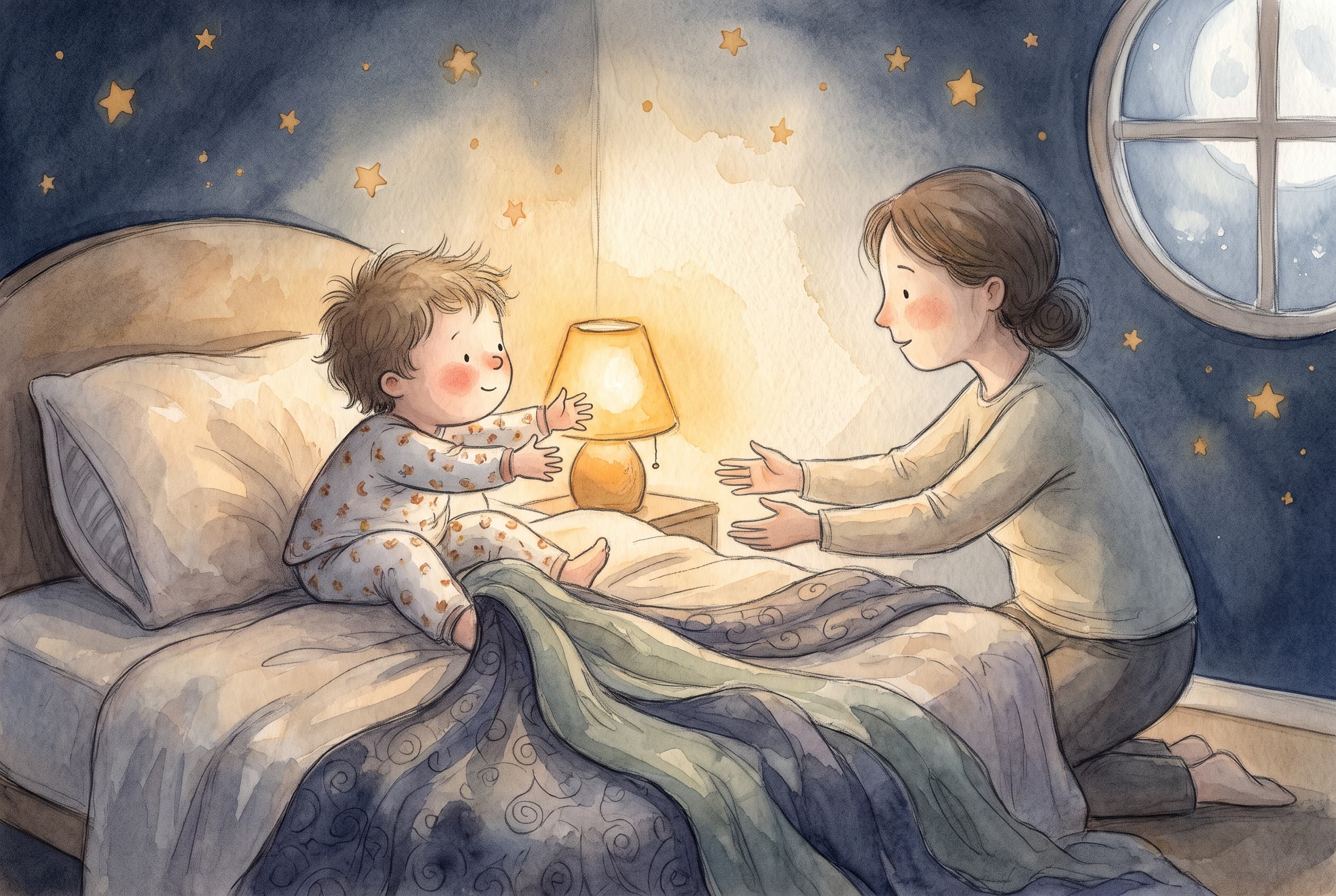
Hvis leggetiden hjemme hos dere føles mindre som en rolig nedtrapping og mer som en forhandling hver eneste kveld, er dere i godt selskap. De fleste foreldre trenger egentlig ikke flere regler – de trenger en leggerutine som holder også på slitne kvelder, ikke bare de gode. Målet er ikke et perfekt, Instagram-verdig ritual. Det er en forutsigbar rekkefølge som kroppen og hjernen til barnet ditt kan lære seg å stole på. Her går vi gjennom hvordan du bygger en leggerutine som faktisk fungerer, med eksempler etter alder, litt om hvorfor rekkefølgen betyr mer enn lengden, og hva du gjør når alt sklir ut klokka 20.47.
Derfor virker rutiner – og derfor holder ikke viljestyrke
Små barn kan ikke lese klokka, men de er helt fantastiske til å lese mønstre. Når de samme tingene skjer i den samme rekkefølgen hver kveld, blir selve rekkefølgen signalet: bad, så pysj, så de samme to bøkene, så den samme sangen. Hvert steg forteller stille og rolig kroppen hva som kommer nå – og melatoninet, hormonet som gjør oss trøtte, begynner å stige akkurat når det skal.
Det er derfor forutsigbarhet slår viljestyrke. Du skal ikke overtale barnet ditt til å bli trøtt med smarte forhandlinger. Du bygger en kjede av signaler som er så pålitelig at rutinen gjør overtalelsen for deg. Det er også derfor det pleier å slå tilbake når du hopper over eller bytter om på steg: da brytes akkurat det mønsteret hjernen regnet med.
En rutine på 20 minutter gjort likt hver kveld slår en rutine på 45 minutter som stadig endrer seg. Velg en kort, gjentakelig rekkefølge du faktisk klarer å holde på en tirsdag etter en lang dag.
Slik ser en rutine som sitter ut
Nesten alle rutiner som fungerer, følger den samme buen: en tydelig start, en nedtrapping av inntrykk, et rolig punkt for nærhet, og en fast avslutning. Her er en enkel versjon du kan tilpasse:
Legg merke til at inntrykkene trappes ned for hvert steg. Dere beveger dere fra aktivt til passivt, fra sterkt lys til dempet, fra høyt til stille. Særlig nærhetssteget – som oftest lesing sammen – gjør dobbel nytte: det roer kroppen og møter behovet for nærhet som ofte er selve motoren bak somlingen.
- Marker starten: et femminutters varsel, dempet lys eller en bestemt sang slik at leggetid aldri kommer som en overraskelse.
- Roe kroppen: bad eller vask, tannpuss, pysjamas – de praktiske stegene som også senker kroppstemperaturen og signaliserer søvn.
- Knytt bånd i ro: dette er hjertet i rutinen – lese, kose, snakke gjennom dagen med lav stemme.
- Land mykt: en fast god natt-frase, et kyss, lyset slukket i samme rekkefølge hver kveld.
Eksempler på rutiner etter alder
Søvnbehov og oppmerksomhet endrer seg raskt de første årene. Bruk dette som utgangspunkt, ikke som fasit.
- Baby (4–12 måneder): Hold det kort, 15–20 minutter. Mat, bad eller vask, svøp eller sovepose, én rolig bok eller sang, lyset av. Prøv å legge dem ned søvnige, men våkne.
- Småbarn (1–3 år): 20–30 minutter. Dette er somlingens gullalder, så bygg inn valg de selv styrer – hvilken pysj, hvilke to bøker – for å dempe maktkampene.
- Barnehagebarn (3–5 år): 25–30 minutter. Legg til en kort prat om «det beste med dagen». Nå kan de følge en bildeplan over stegene, og det gir mer samarbeid.
- Skolebarn (6–9 år): 20–30 minutter. Nå betyr selvstendighet mye. La dem gjøre flere steg selv, men vern om lese- og pratetiden – det er ofte da bekymringene kommer opp.
Sett et realistisk starttidspunkt – og vern om det
Den vanligste tabben er ikke selve rutinen – det er å starte for sent. Et overtrøtt barn er oppspilt, ikke søvnig, og mye vanskeligere å få ned. Regn baklengs fra når du vil at barnet skal sove, legg til hele lengden på rutinen, og litt buffer på toppen.
Vil du at lyset skal være av klokka 19.30 og rutinen tar 30 minutter, starter leggetiden 18.45, ikke 19.25. Se etter tidlige søvntegn – gnir seg i øynene, stirrer ut i lufta, plutselig ellevill energi – og la det være den egentlige klokka. Når du har funnet et starttidspunkt som funker, verner du om det som en avtale. Rutiner faller oftest fra hverandre fordi de sniker seg senere og senere.
Nærhetssteget: derfor er lesingen ankeret
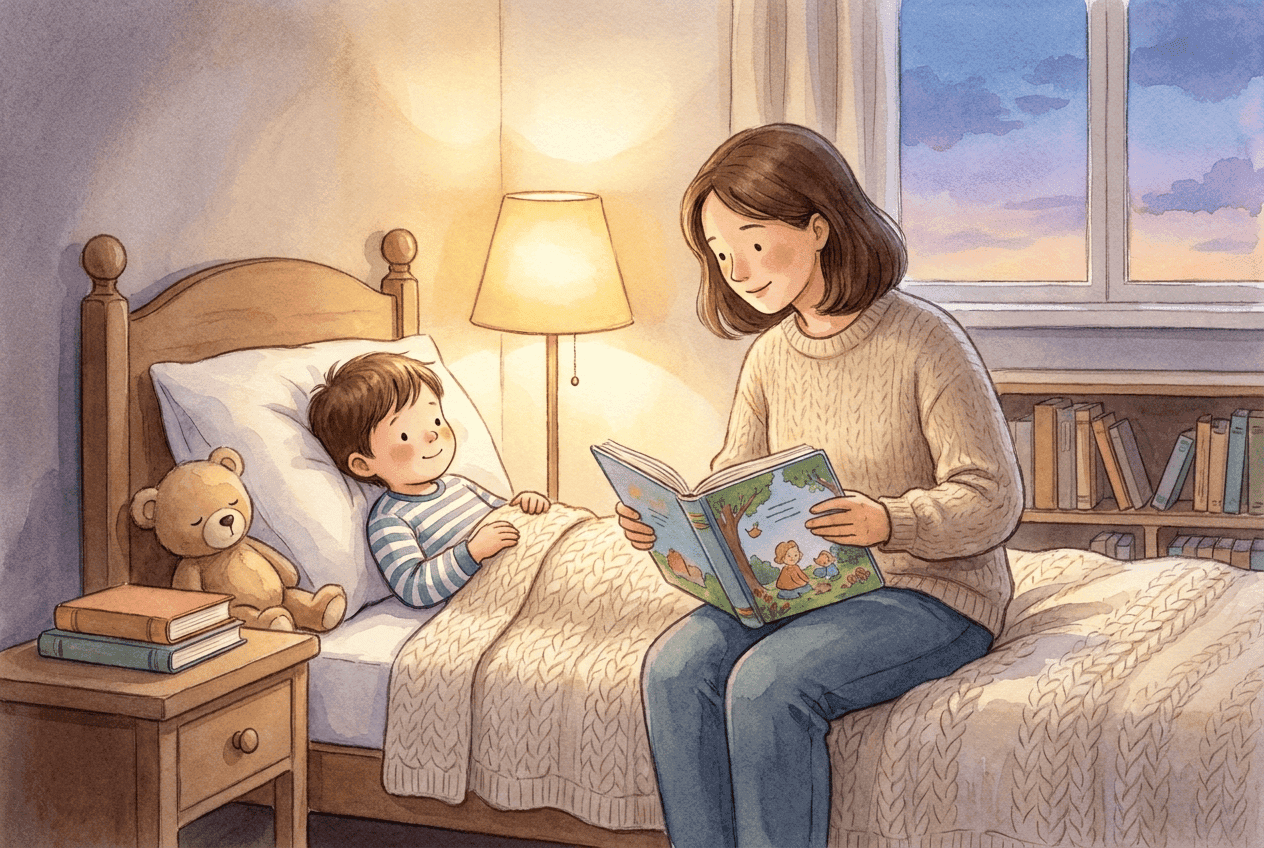
Hvis du bare skal verne om én del av rutinen, la det være den rolige lese- og pratestunden. Det er her barn bearbeider dagen, stiller spørsmålene de var for opptatt til å stille tidligere, og fyller på med oppmerksomheten din – så de slipper å jakte på den etter at lyset er slukket.
Historier gir også de store følelsene et trygt rom. En bok om en modig figur lar et engstelig barn øve på mot; en mild godnatthistorie forteller at dagen virkelig er over. Å velge én eller to faste bøker – i stedet for en stadig skiftende bunke – styrker signalet, og det er nettopp derfor en kjær, gjentakelig godnatthistorie så ofte blir selve hjertet i en rutine som faktisk fungerer. Hvis nattredsel er det som stadig velter leggetiden, passer guiden vår for et barn som er redd for mørket godt sammen med disse stegene. Du kan bla i noen rolige eksempler blant våre eksempler på godnattbøker.
“Barn vokser ikke fra behovet for å bli lest for, lenge etter at de kan lese selv. Det er nærheten som er poenget.”
— En påminnelse verdt å teipe på bokhylla
Når alt raser: løsninger på de vanlige snublene
Selv en god rutine får dårlige kvelder. Løsningen er som regel å justere én ting, ikke å bygge om alt.
- Den endeløse «bare én ting til»: Bygg forespørslene inn i selve rutinen – siste slurk vann, siste klem, siste spørsmål – så de skjer før lyset slukkes, ikke etter.
- Dukker opp i døra igjen: Svar rolig, kjedelig og likt hver gang. Følg dem tilbake med minst mulig snakk. Forutsigbart og uspennende er det som virker.
- Leggetiden tar plutselig en time: Som regel et tegn på at starten krøp for sent, eller at dagsøvnen ble for lang. Flytt tidligere før du innfører nye regler.
- Kjemper mot hele rutinen: Tilby små, avgrensede valg («denne boka eller den?») for å gi litt kontroll tilbake, uten å forhandle om selve leggetiden.
Gi det to uker før du dømmer det
Nye rutiner føles verre før de føles bedre, fordi barn tester om det nye mønsteret faktisk holder. Stå støtt i rundt to uker med så mye jevnhet du klarer – samme steg, samme rekkefølge, samme starttidspunkt. De fleste familier ser motstanden gi seg etter hvert som forutsigbarheten synker inn. Er dere på reise eller noen blir syke, hold gjerne en nedstrippet versjon av rekkefølgen i gang likevel: den kjente rekkefølgen reiser bedre enn noe enkelt soverom gjør.
Kort oppsummert
- Rekkefølge og jevnhet betyr mer enn hvor lang rutinen er – velg en kort sekvens du klarer å gjenta også på tunge kvelder.
- Start leggetiden tidligere enn det føles nødvendig; overtrøtte barn faller vanskeligere til ro, ikke lettere.
- Vern om den rolige lese- og nærhetsstunden – den roer kroppen og møter behovet som driver somlingen.
- Gi en ny rutine rundt to uker med jevn gjentakelse før du bestemmer om den fungerer.
Ofte stilte spørsmål
Hvor lang bør en leggerutine være?+
For de fleste barn under 10 fungerer en leggerutine på 20 til 30 minutter godt. Babyer trives best med en kortere versjon på 15–20 minutter. Jevnhet i stegene og rekkefølgen betyr mer enn den totale lengden – en kort rutine gjort likt hver kveld slår en lang som stadig endrer seg.
Hva er den ideelle rekkefølgen i en leggerutine?+
En pålitelig rekkefølge går fra aktivt til rolig: et tydelig startsignal, så praktiske steg som bad, tannpuss og pysj, deretter et rolig nærhetssteg som lesing og prat, og til slutt en fast godnatt og lyset av. Å holde samme rekkefølge hver kveld hjelper kroppen til barnet ditt å forberede seg på søvn.
Hvordan fikser jeg en leggerutine som har sluttet å virke?+
Endre én ting av gangen i stedet for å bygge om alt. Den vanligste løsningen er å starte leggetiden tidligere, siden overtrøtte barn kjemper mot søvnen. Deretter verner du om den rolige lesestunden, bygger inn små forespørsler som vann og klem i rutinen, og svarer rolig og likt hver gang de dukker opp igjen – i rundt to uker.
Skrevet av The Hello Storybook Team, Foreldre, forfattere og fortellere.
← Alle innlegg