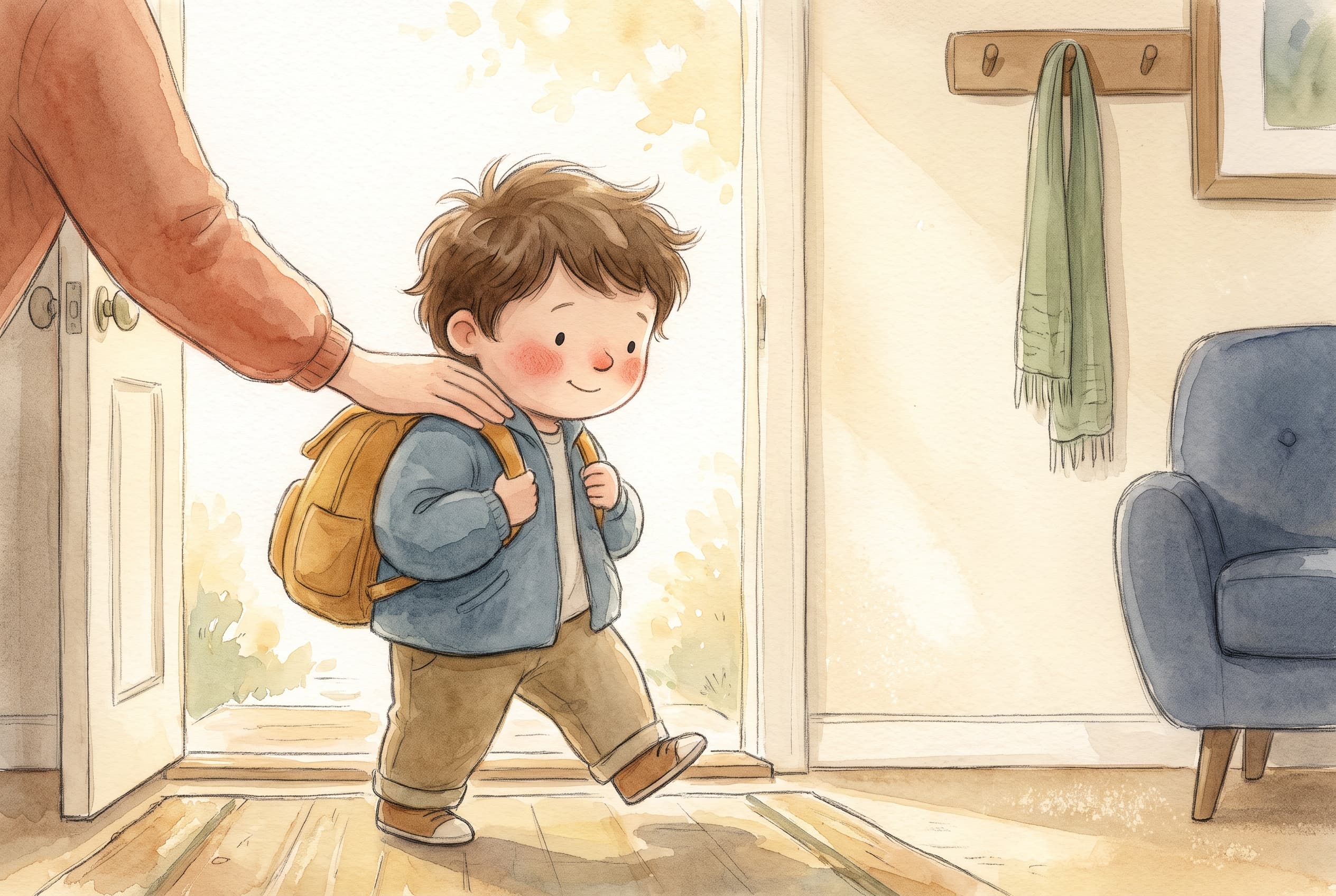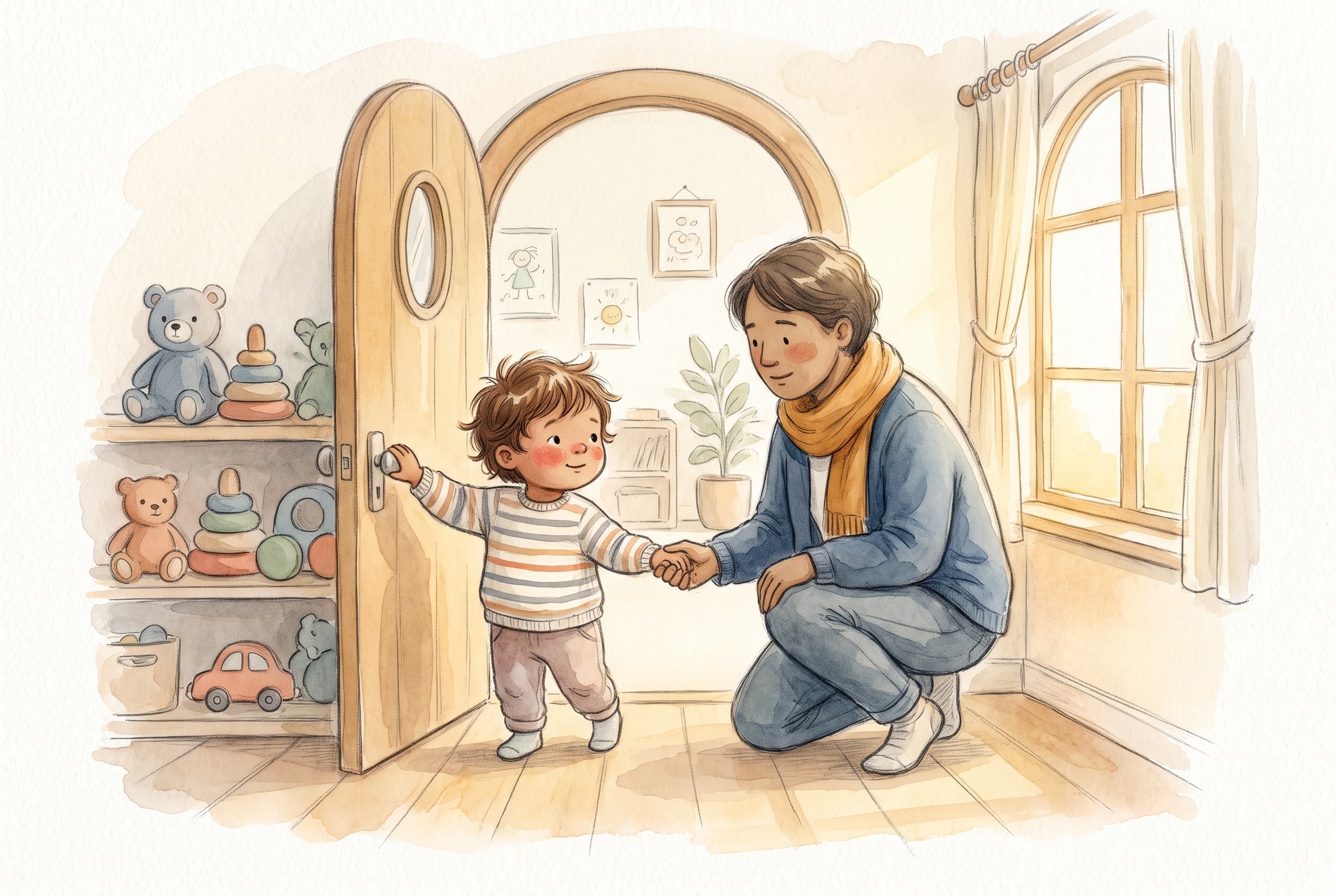
The first daycare drop-off is a big moment for both of you — and starting daycare separation is one of those milestones that can feel harder for the grown-up than the child. The tears, the clinging at the door, the drive home with a knot in your stomach: it's all normal, and it almost always gets easier. This guide walks you through what's really happening for your child, and the small, specific habits that make goodbyes calmer week by week.
Why the first drop-off feels so hard
Separation distress isn't a sign that something is wrong — it's a sign that your bond is working. Around 8 months to 3 years, children are developmentally wired to protest when their safe person leaves. Their brains haven't yet mastered 'object permanence for people': when you're out of sight, it can feel like you're gone for good, not gone until 3pm.
The good news is that daycare teachers see this every single day. A child who sobs at 8:02am is very often happily stacking blocks by 8:12am. Knowing that pattern — big protest, quick recovery — takes a lot of the sting out of the doorway moment.
Easing starting daycare separation before day one
The groundwork you lay in the week or two before the first day does more than anything you can do at the door itself. The goal is to make daycare feel familiar and predictable before it's also emotional.
- Visit together first. If your center allows a short stay-and-play visit, go once or twice so the room, the smells, and a teacher's face aren't brand new.
- Name the routine out loud. 'After breakfast we go to school, you play, then I come back.' Repetition builds trust in the sequence.
- Practice tiny separations at home — leave the room and return, cheerfully, so goodbye-and-reunion becomes a known story.
- Talk about the teacher by name. A person your child can picture is far less scary than 'the daycare.'
If your child is also anxious about structured settings in general, our companion guide on getting ready for preschool has more on building that readiness gradually.
Build a goodbye ritual (and keep it short)
Children relax into predictability. A consistent, brief goodbye ritual gives your child a clear beginning and end to the hard part — instead of an open-ended, drawn-out leaving that keeps reopening the wound.
- Say the same short phrase every time: 'Big hug, big kiss, I always come back.'
- Add one tiny physical ritual — two high-fives, a window wave, a secret handshake.
- Hand your child to a teacher so they have someone to turn toward as you go.
- Leave with confidence. Lingering tells your child the situation might be worth worrying about.
Don't sneak out. It feels kinder in the moment, but when a child turns and finds you gone, it teaches them to watch you anxiously all day. A clear, loving goodbye — even with tears — builds more trust than a vanishing act.
What to do when the tears come
Some crying is okay. Your job isn't to prevent every tear — it's to stay warm and steady so your child learns that big feelings are survivable. Crouch to their level, acknowledge the feeling ('You wish I could stay — I know'), do your ritual, and go. Dragging out the goodbye to comfort them usually makes it worse.
Trust the teacher's report. Ask them to text you ten minutes after you leave; the quick turnaround from tears to play will reassure you more than anything. For children whose worry runs deeper, our piece on helping an anxious child offers calming tools you can use at home too.
“Separation anxiety is not a problem to be fixed. It's a feeling to be accompanied — and it shrinks every time a child discovers that you really did come back.”
— A pediatric early-childhood specialist
Comfort objects and transition anchors
A piece of home bridges the gap between your arms and the daycare room. A familiar object gives your child something to hold when they can't hold you.
- A small lovey, blanket, or soft toy (check your center's policy on what's allowed).
- A family photo tucked in their cubby or backpack.
- A 'kiss' drawn on their hand, or a matching bracelet you both wear.
- A predictable pickup cue — the same snack or song in the car on the way home.
Stories are a quiet anchor too. Reading the same book about a child who goes to school, has a good day, and gets picked up gives your child a rehearsal they can replay in their mind. A personalized book where your child is the hero of their own drop-off adventure makes that rehearsal feel personal — they see a child who looks like them being brave and coming home again.
The settling-in timeline
Give it two to three weeks before you judge how it's going. Many children follow a predictable arc: a rough first few days, a deceptively calm patch, a second wobble around week two as the newness wears off, and then genuine settling. Mondays and post-illness returns often reset the clock a little — that's normal, not backsliding.
If after several weeks drop-offs are still escalating rather than easing, or your child seems distressed throughout the day rather than just at goodbye, talk to the staff and your pediatrician. Our deeper dive on drop-off separation anxiety covers when to push and when to seek more support.
Take care of your own goodbye feelings
Your child reads your body like a weather report. If you're calm, they borrow your calm. That doesn't mean faking it forever — cry in the car if you need to — but at the door, your steadiness is the gift. Line up a supportive text thread, plan something small for yourself after that first drop-off, and remember: you're not abandoning your child, you're widening the circle of people who love them.
Key takeaways
- Separation protest is normal and usually brief — most children recover minutes after you leave.
- Lay groundwork before day one: visit, name the routine, and practice small goodbyes.
- Use a short, consistent goodbye ritual and never sneak out.
- Give it two to three weeks, expect a mid-point wobble, and seek support if distress doesn't ease.
Frequently asked questions
How long does daycare separation anxiety last?+
Most children settle within two to three weeks, with the hardest part being the first few days and a common second wobble around week two. Daily goodbye rituals and consistent pickup times speed up the adjustment. If distress is still escalating after several weeks, talk to the staff and your pediatrician.
Should I stay at daycare until my child calms down?+
No — a lingering goodbye usually prolongs the distress. A short, warm, confident goodbye followed by a clean exit teaches your child that you leave and reliably come back. Ask a teacher to text you a few minutes after you go; most children settle quickly once you're out of sight.
Is it okay to let my child bring a comfort object to daycare?+
Yes, if your center allows it. A lovey, blanket, or family photo bridges the gap between home and the classroom and gives your child something to hold when they can't hold you. Check your daycare's policy first, and label anything you send.
Written by The Hello Storybook Team, Parents, writers & storytellers.
← All stories