If your child is bringing home a stack of word cards from school — or you just want a head start — you're in the right place. Teaching sight words at home sounds intimidating, but it's really just short, playful bursts of practice woven into your day. This guide covers what sight words actually are, when to start, and the low-pressure games that make them stick, so five minutes on the kitchen floor does more than a worksheet ever could.
What sight words actually are
Sight words are the common little words that show up constantly in text — the, and, is, was, you, said. Many can't be sounded out neatly ("the" doesn't follow tidy phonics rules), so children learn to recognize them instantly, on sight. That instant recognition frees up mental energy for the harder work of decoding new words and understanding the story.
You'll often see two lists referenced: the Dolch list (220 words plus 95 nouns) and the Fry list (the 1,000 most frequent words). You don't need to memorize either. Your child's teacher will usually send words in small batches; if you're going solo, start with the first 10–15 Dolch pre-primer words like a, and, I, see, go, my.
When to start (and when to wait)
Most children begin formal sight word work in kindergarten, around ages five to six, but there's a wide, normal range. The best readiness signs aren't about age — they're about interest: your child points at words, asks "what does that say?", or recognizes logos and their own name. That curiosity is your green light.
If your child isn't there yet, don't push. Keep reading aloud together and building oral language — that groundwork matters more than early flashcards. Our post on screen-free activities that build a love of reading has plenty of gentle ways to lay that foundation first.
The core method: see it, say it, use it
Introduce just two or three words at a time — not the whole list. Overloading a child guarantees frustration. For each new word, walk through a simple loop:
- See it: point to the word and read it aloud clearly.
- Say it: have your child repeat it, then trace the letters with a finger while saying it again.
- Spell it: say the letters out loud together — s-a-i-d, said.
- Use it: put the word in a silly sentence together ("The dinosaur said hello to the toaster").
Do this for a few minutes, review yesterday's words, and stop while it's still fun. Consistency beats duration every single time — five minutes daily crushes a stressful thirty-minute session on Sunday.
Games that make words stick
Kids learn sight words fastest when they don't feel like they're studying. Rotate through a handful of these so practice never gets stale:
- Word hunt: write words on sticky notes and hide them around the house — every found word gets read aloud.
- Sidewalk chalk: shout a word, child runs and stomps it or hops to it.
- Swat it: spread cards on the table and have your child swat the word you call with a fly swatter.
- Rainbow writing: trace each word in three different crayon colors.
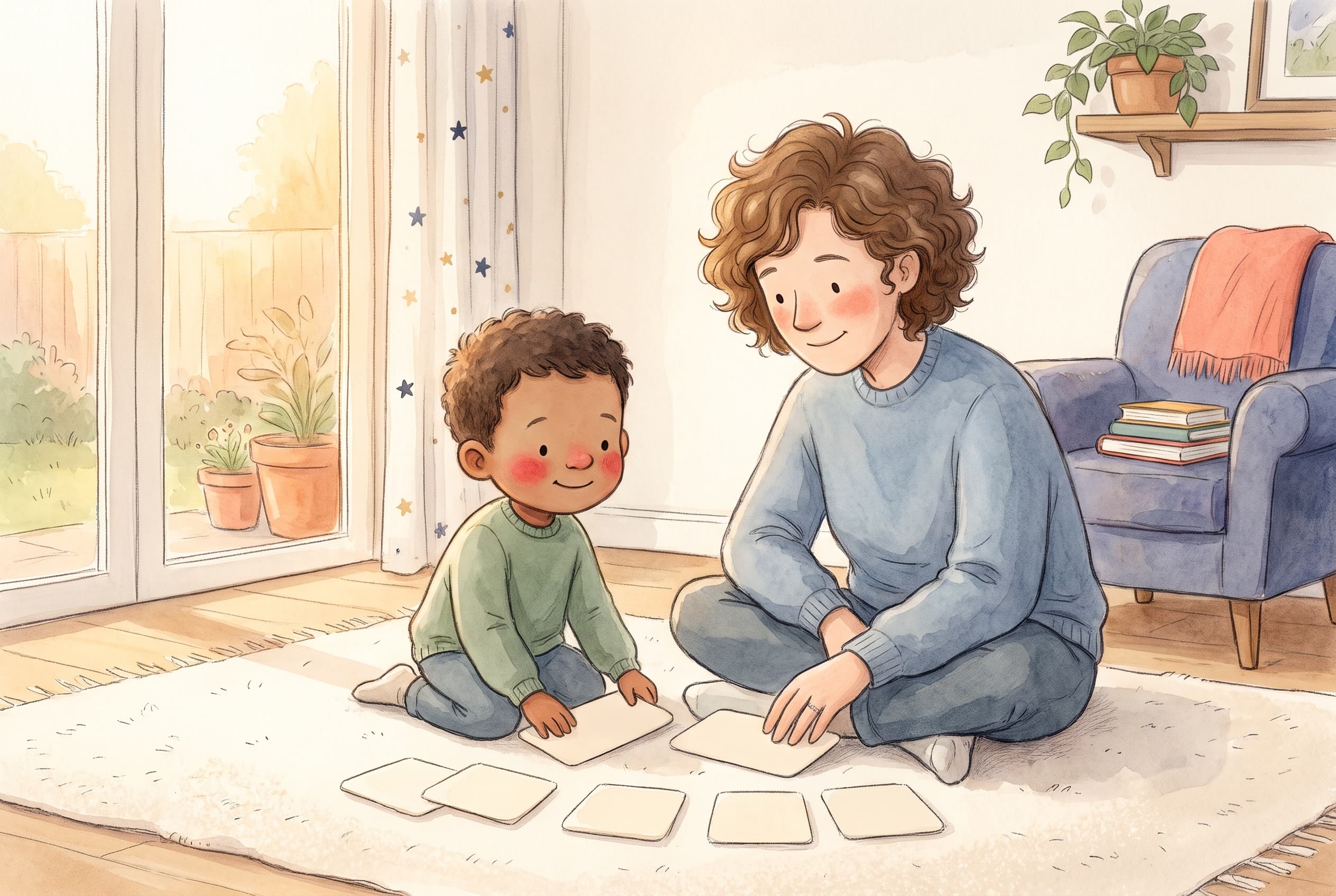
- Go Fish or memory: make two of each card and play a matching game.
- Beat the clock: how many words can they read in one minute? Track the record, not the misses.
When your child gets a word wrong, don't correct sharply. Just say the word warmly and move on: "That one's tricky — it's 'were.' Let's find it again later." A child who feels safe making mistakes keeps trying; a child who feels tested shuts down.
Read real books, not just cards
Flashcards build fast recognition, but words only truly stick when a child meets them inside stories. After a practice session, open a book and let your child spot the words they're learning "in the wild." Point and cheer when they catch one — that flash of "I know that word!" is what turns practice into confidence.
This is also where personalization does quiet, powerful work. A child is far more motivated to read a page when it's about them. A story that repeats their learning words in the context of their own adventure — with their name on every page — gives sight words a reason to matter. If you want more ways to make reading feel like connection rather than homework, our read-aloud tips that turn story time into a ritual pair beautifully with sight word practice.
How to know it's working
Progress in sight words looks like automaticity: your child reads the word without pausing to sound it out or guess. If they're still decoding letter by letter, the word isn't mastered yet — that's fine, just keep it in rotation. A good rhythm is to move a word to the "known" pile only after your child reads it correctly and quickly on three separate days.
Watch out for guessing from the first letter (reading "want" as "went") — a sign they're skimming rather than recognizing. Slow down, point to the whole word, and re-anchor it. And remember: some words take a dozen exposures, others take forty. That variation is completely normal and says nothing about your child's intelligence.
A quick word on burnout — theirs and yours
If sessions start ending in tears or eye-rolls, back off immediately. Reading should never become the thing your child dreads. Take a few days off, switch to a game, or just read aloud together for the pure joy of it. The long game — a child who loves books — is always more important than mastering "because" by Friday.
“The goal isn't a child who can pass a word test. It's a child who reaches for a book on their own.”
— Every reading teacher, eventually
Key takeaways
- Introduce just 2–3 sight words at a time and practice for five minutes daily — consistency beats long sessions.
- Use the see it, say it, spell it, use it loop, then reinforce with playful games like word hunts and swat-it.
- Move a word to the "known" pile only after fast, correct reads on three separate days.
- If practice causes tears, pause and read for joy — a lifelong love of reading matters more than any single word.
Frequently asked questions
At what age should I start teaching sight words at home?+
Most children start around ages five to six, but readiness matters more than age. If your child points at words, asks what they say, or recognizes their own name and logos, they're ready. If not, keep reading aloud and building language first.
How many sight words should I teach at once?+
Introduce just two or three new words at a time. Practice them alongside a review of previously learned words for about five minutes a day. Adding too many at once overwhelms children and leads to frustration and guessing.
What's the difference between sight words and phonics?+
Phonics teaches children to sound out words letter by letter. Sight words are common words learned by instant recognition, often because they don't follow standard phonics rules. Kids need both — sight words free up mental energy for decoding harder words.
Written by The Hello Storybook Team, Parents, writers & storytellers.
← All stories