A good read-aloud isn't about reading well — it's about making the moment feel reliable. Kids settle when they know what's coming. These read-aloud tips are less about performance and more about turning story time into a ritual your child can count on, the kind they'll remember decades from now. Whether you're reading a library paperback or a personalized book where your child is the hero, the structure below works.
Most advice about reading to children focuses on the books. But the magic of a read-aloud is rarely the story itself — it's the predictable warmth around it. The same blanket. The same lamp. The same voice slowing down at the same page. Rituals work because they signal safety, and a regulated child is a child who can actually listen.
Why a Story Time Ritual Beats a Perfect Reading
You do not need to be a great performer. Children respond to consistency far more than to dramatic flair. A ritual lowers the nightly negotiation, and it anchors a larger bedtime routine, because the routine itself does the work of saying "we're winding down now." When the cues repeat — pajamas, teeth, two books, lights low — the child's body starts settling before you've read a word.
This is also why the same book on repeat is a feature, not a bug. Rereading builds anticipation and vocabulary, and it lets younger kids "read" along by memory, which feels like mastery to them.
You don't need a long session. Ten focused, unhurried minutes beats thirty distracted ones. Protect the time by putting your own phone in another room — kids notice where your attention actually goes.
Set the Scene Before You Open the Book
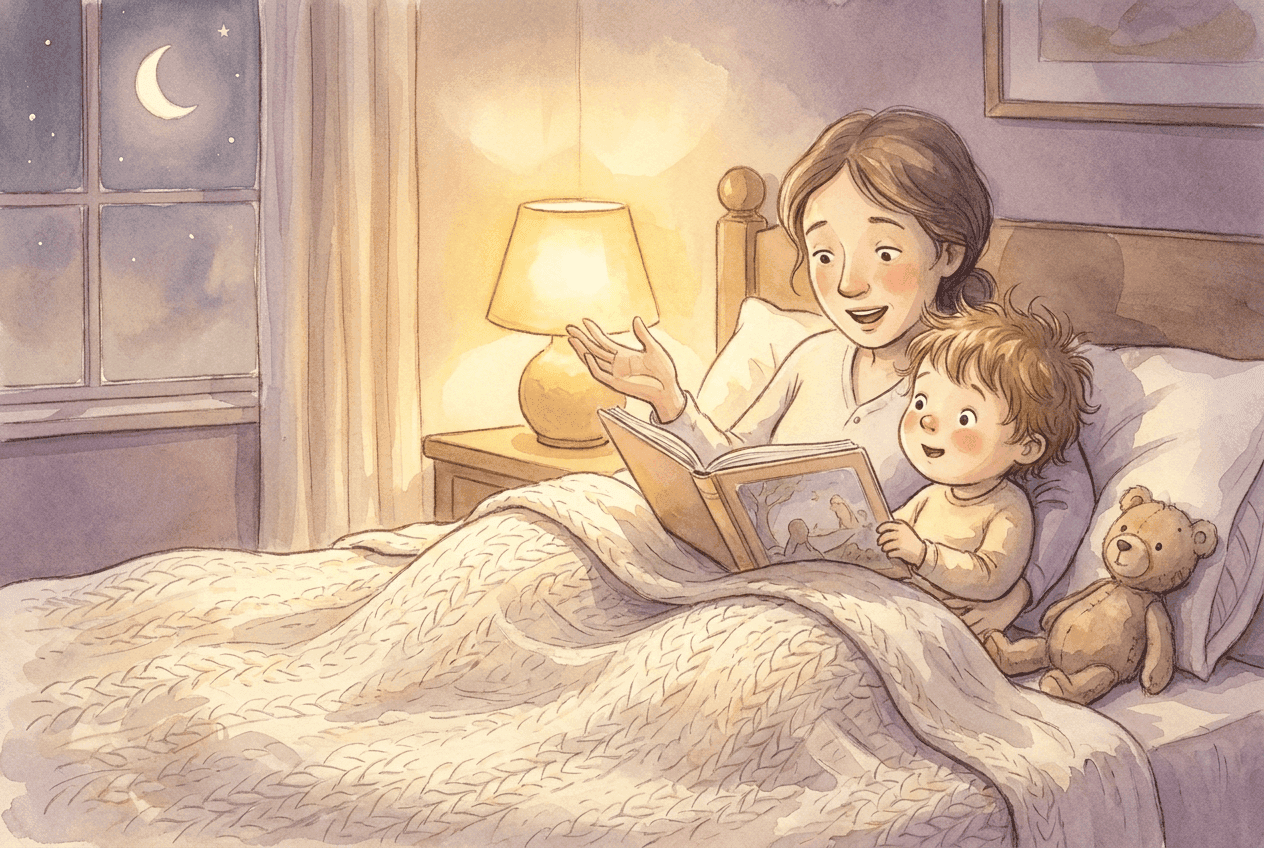
Treat the environment as part of the story. A few small, repeatable cues tell your child's nervous system that the day is closing down.
- Dim the main light and switch to a single warm lamp.
- Pick the same spot every night — a bed, a chair, a corner with cushions.
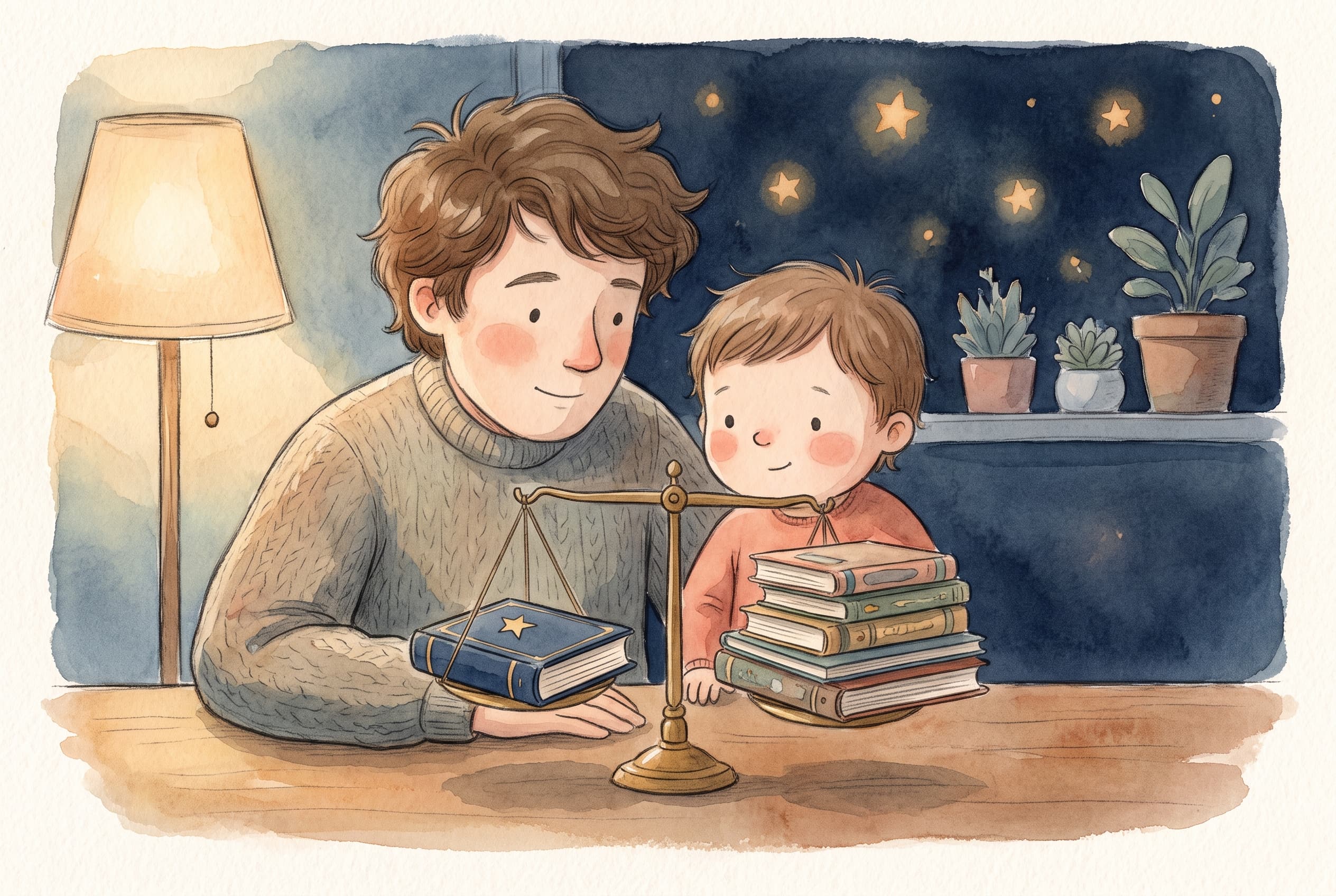
- Let your child choose between two books, not the whole shelf (too many options stalls bedtime).
- Start with a sentence that's always the same: "Okay, snuggle in — what are we reading tonight?"
- Keep water and a comfort object within reach so no one pops up mid-story.
How to Read Aloud by Age
What works at 18 months will bore a six-year-old. Match your approach to where your child actually is.
- Babies and toddlers (0–2): Keep it short and interactive. Point and name things, let them turn pages and chew the corners. Board books survive this stage; your goal is association, not comprehension.
- Preschoolers (3–5): Use voices and pause for prediction — "What do you think is behind the door?" Run your finger under a few words so they start linking sound to print.
- Early readers (5–7): Let them read a page, you read a page. Don't correct every mistake; finish the sentence and gently model the word. Confidence matters more than accuracy here.
- Independent readers (7–10): Keep reading aloud even when they can read alone. Tackle books above their reading level so they meet richer language, and use the time to talk about characters' choices.
Read With Your Voice, Not at the Page
Slow down. New readers and listeners process more slowly than adults read, and a relaxed pace is what makes a story feel cozy rather than rushed. A few techniques go a long way:
- Give recurring characters a simple, consistent voice — even just a slightly higher or lower tone.
- Pause after exciting moments instead of barreling on. Silence builds suspense.
- Drop your volume at the calm parts; whispering pulls a child in closer.
- Trail off on a familiar phrase and let your child fill in the blank.
“The single most important activity for building the knowledge required for eventual success in reading is reading aloud to children.”
— Becoming a Nation of Readers, U.S. Department of Education report
Make the Child Part of the Story
Engagement soars when the child sees themselves in the pages. Ask questions that invite them in: "Has that ever happened to you?" or "What would you have done?" Connect plot points to their real day. Stories that center a child by name — a sibling becoming a big sister, a nervous kid finding courage — land harder because the lesson feels personal rather than abstract.
You can also let your child "direct" occasionally: they choose which character you voice, or they hold the book and decide when to turn the page. Small bits of control reduce bedtime power struggles.
Handle the Hard Nights
Some evenings the ritual frays. Here's what to do instead of giving up:
- "One more book!" — Decide the number before you start and name it out loud: "Two books tonight." Then hold it kindly. The boundary is part of the calm.
- Too wound up to sit still — Switch to a quiet, repetitive bedtime-calm story and read slower than feels natural. Your pace sets theirs.
- Interrupting constantly — Welcome it for younger kids; it's how they engage. For older kids, say "Hold that thought for the end of the page."
- No time tonight — A two-minute version still keeps the ritual alive. Consistency beats length every time.
End the Same Way Every Night
A closing cue matters as much as an opening one. Land on the final page, close the book slowly, and say the same goodnight line every time. Repetition at the end signals that the day is genuinely finished — which is exactly what an overtired child needs to let go and sleep.
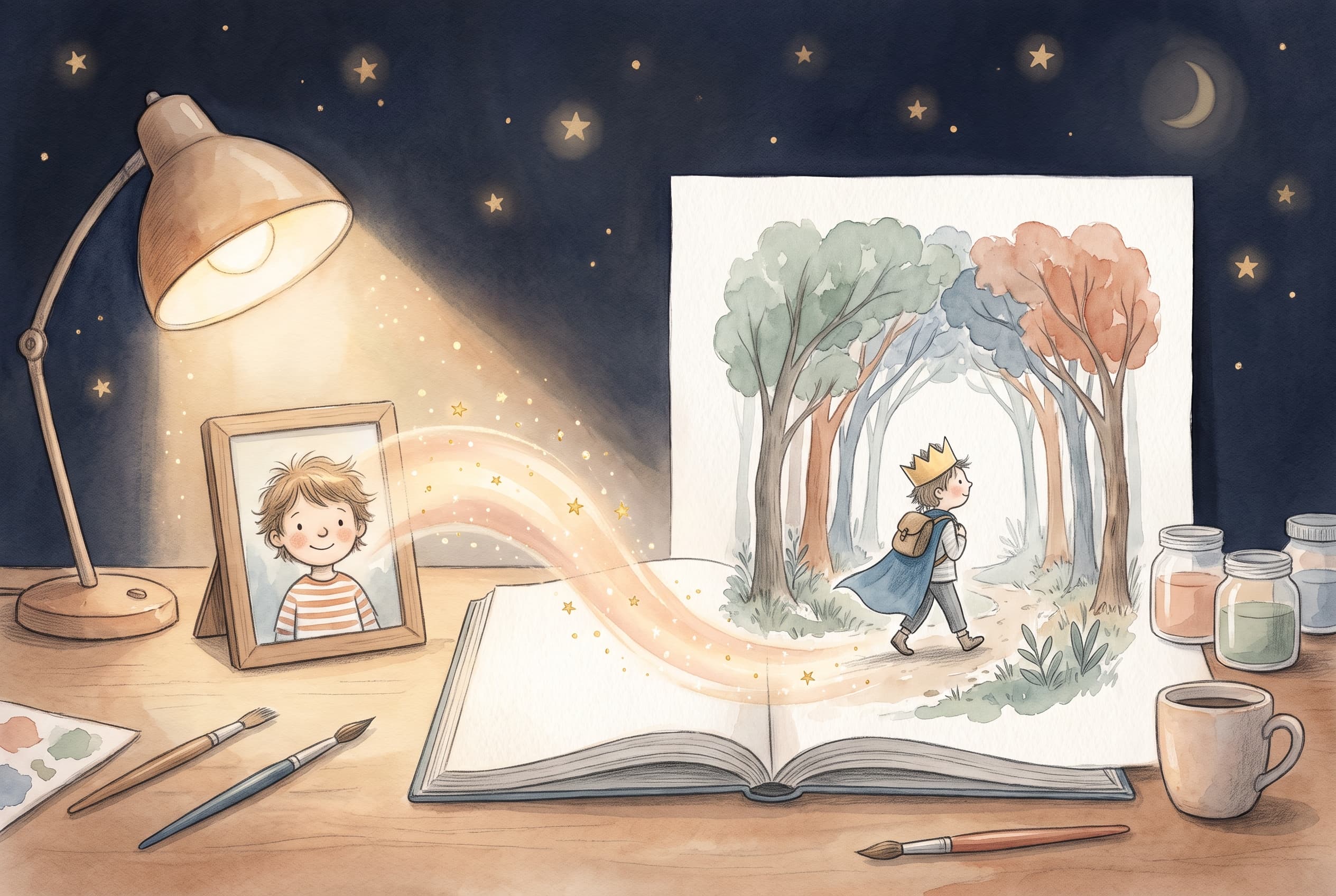
If you want a story that's built for this moment, a personalized book featuring your own child as the hero gives them a reason to ask for the same book night after night — and that repetition is what cements the ritual. You can create one in a few minutes with your child's name and likeness woven through every page, or browse a few sample books first to see how it reads aloud.
Key takeaways
- Consistency matters more than dramatic reading — the same time, spot, and cues do the real work.
- Match your style to your child's age, from naming pictures with toddlers to taking turns with early readers.
- Slow your pace, lower your voice, and invite your child into the story to deepen engagement.
- Keep the same opening and closing lines so the ritual has a clear, calming start and end.
Frequently asked questions
How long should a read-aloud session be?+
Aim for about 10 minutes for most young children, adjusting up or down by age and attention. Consistency matters more than length — a short, focused, daily read-aloud builds the ritual better than an occasional long one.
Should I let my child read the same book over and over?+
Yes. Repetition is how young children build vocabulary, anticipation, and confidence. Hearing or 'reading' a favorite book repeatedly lets them predict what comes next and feel a sense of mastery, which is exactly what makes story time a comforting ritual.
When should I stop reading aloud to my child?+
There's no need to stop once they can read alone. Keep reading aloud through age 10 and beyond, choosing books slightly above their independent reading level so they're exposed to richer language and bigger ideas while still enjoying the shared time with you.
Written by The Hello Storybook Team, Parents, writers & storytellers.
← All stories