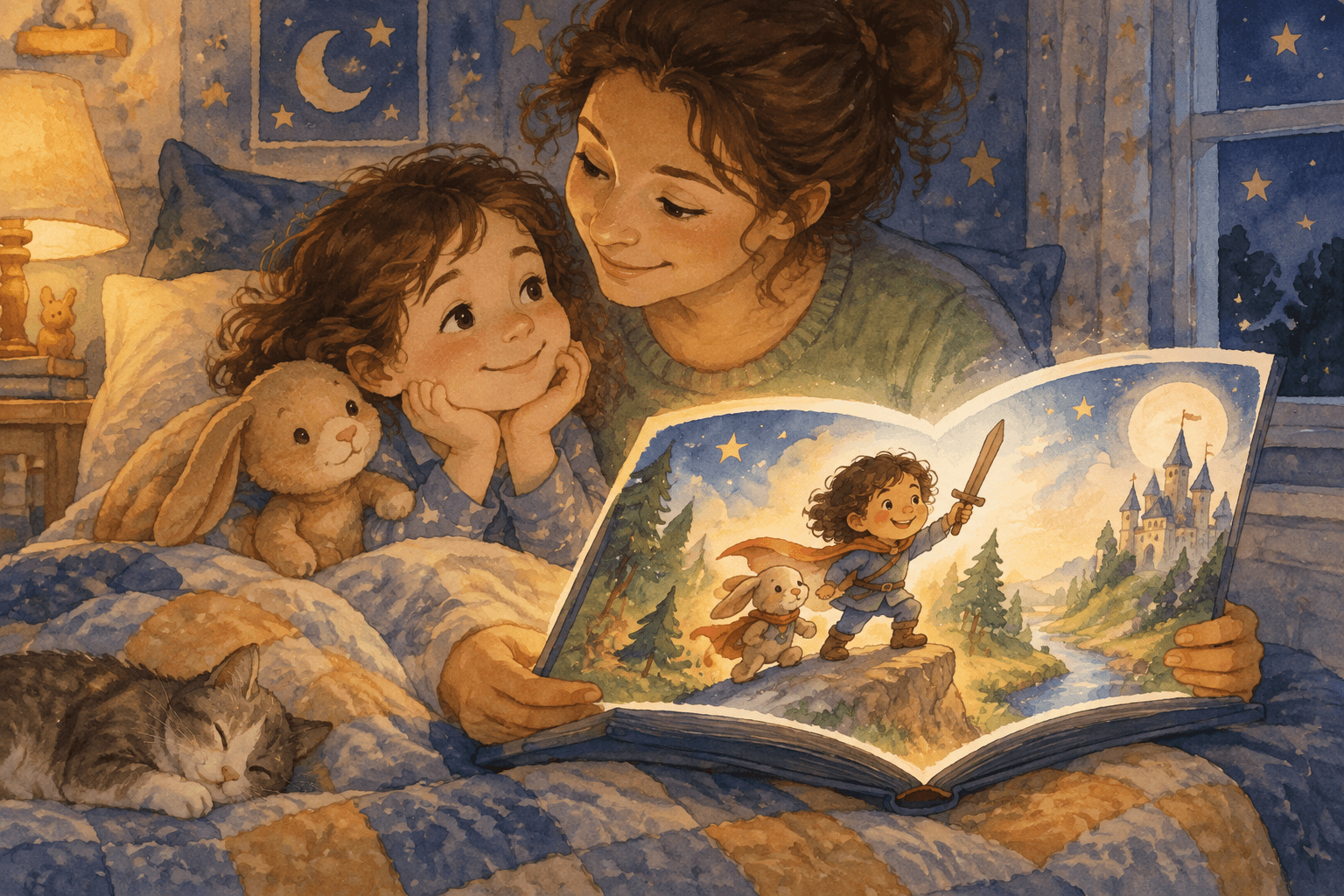
There's a special kind of quiet when you make up a story and your child suddenly realizes it's about *them*. If you've ever wondered how to write a bedtime story for your child but worried you're not creative enough, take a breath — you already know the two things that matter most: your child, and what happens in their day. This guide walks you through a simple, repeatable way to build a bedtime story your little one will beg to hear again.
Why a story starring your child works so well
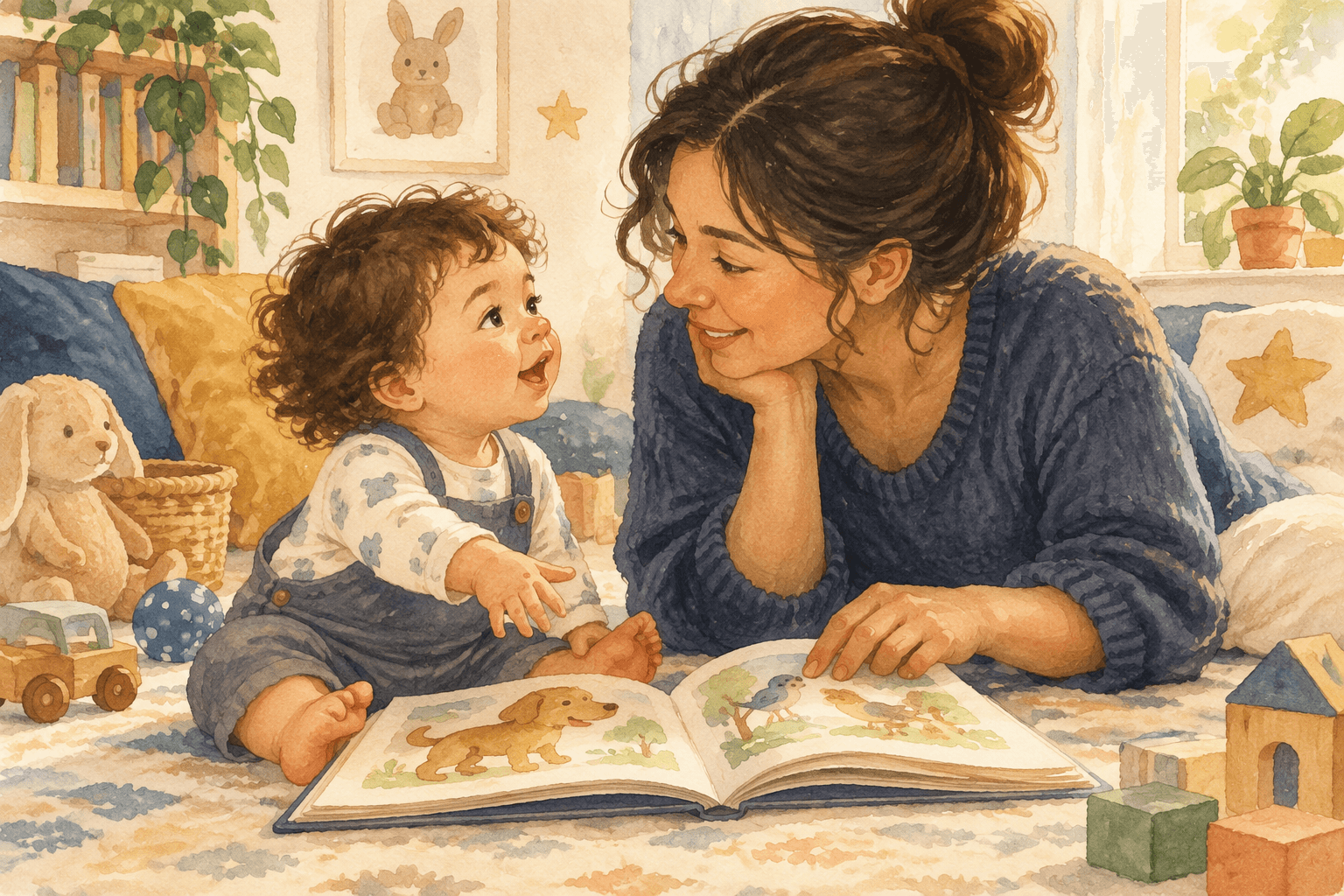
Young children are naturally self-focused — not selfishly, but developmentally. When the hero of the story shares their name, their messy curls, their fear of the dark, or their love of dinosaurs, they listen harder and remember longer. A personalized story also gives you a gentle way to rehearse real-life situations: a first day of school, a new sibling, a visit to the dentist. The story becomes a safe practice run.
It doesn't need to be polished. A wobbly, made-up-on-the-spot tale told in your voice beats a flawless one every time. Bedtime storytelling is a ritual as much as a narrative, and it pairs beautifully with a bedtime routine that actually works.
Start with a theme, not a plot
Don't try to invent a whole adventure at once. Start by asking: what does my child need from this story tonight? That's your theme. A plot is just a theme wearing a costume.
- Something they're proud of (learning to swim, a new skill)
- Something they're nervous about (a doctor's visit, a sleepover)
- Something they love (trains, horses, outer space)
- A gentle lesson (sharing, bravery, kindness)
- Pure comfort and calm — a sleepy, cozy wind-down
If bedtime is a battle right now, lean toward calm, low-stakes themes. High-energy chases and scary villains can backfire at 7:45pm. For anxious or fearful children, a reassuring story can do real work — our guide on helping a child who's scared of the dark covers this well.
Use a simple five-beat shape
Almost every satisfying bedtime story follows the same gentle arc. Memorize these five beats and you'll never be stuck again:
- Once upon a time: introduce your child in a familiar, cozy place.
- One day: something small changes or a little wish appears.
- The middle: your child tries, wobbles, and tries again.
- The turn: with a bit of courage or a helper, things come together.
- Settling down: the problem is solved and everyone grows sleepy.
Notice how the energy rises in the middle and then deliberately falls. That descent is the whole point at bedtime — you're narrating your child toward sleep, not toward an encore.
Make your child feel truly seen
The magic is in the specifics. Generic heroes are forgettable; your actual child is not. Weave in tiny true details: the gap where they lost a tooth, the stuffed rabbit named Pickle, the way they hum when they're happy. These details signal love louder than any plot twist.
“The best personalized stories aren't about making your child a superhero. They're about showing your child that the ordinary, real version of them is already worth a whole book.”
— A parent-tested truth
You can also gently cast real people — a sibling, a grandparent, the family dog — as side characters. For tips on reading it aloud so it lands, see our read-aloud tips that turn story time into a ritual.
Match the story to your child's age
A toddler and a seven-year-old need very different stories. Tuning the complexity keeps your child engaged instead of restless or lost.
- Ages 1–3: Short, repetitive, lots of sounds and animals. Repeated phrases they can chime in on. Keep it under a few minutes.
- Ages 3–5: A simple problem and solution, familiar settings, a little emotion to name. This is the sweet spot for 'practice' stories about new experiences.
- Ages 5–7: More adventure, a touch of suspense that resolves gently, and a clear feeling or lesson. They'll enjoy predicting what happens next.
- Ages 7+: Let them co-author. Pause and ask, 'What should happen now?' and build on their idea.
End on calm, every time
However the story twists, bring it home the same way each night: the hero is safe, loved, and cozy in bed. A repeated closing line — your own little 'The End' ritual — becomes a powerful sleep cue. Something like, 'And so [name] closed their eyes, warm and happy, and drifted off to the softest dreams.'
Too tired to invent anything? Ask your child three questions: Who's the hero? Where are they? What do they want? Stitch their answers into the five-beat shape and let the story build itself. You narrate; they steer.
When you want to make it last
Some stories are too good to let disappear into the dark. If your child keeps asking for 'the one about me,' consider turning it into something they can hold and keep. A personalized bedtime story book puts your child on every page as the hero — their name, their look, their adventure — illustrated and bound so it survives being read a hundred times. You can start creating one in a few minutes, or browse sample stories to see how the magic looks in print. It's the same story you'd tell from memory, made into a keepsake they'll outgrow and still treasure.
Not sure whether to go digital or printed? Our guide on digital vs. printed kids' books can help you decide.
Key takeaways
- Start with what your child needs tonight — the theme — not a complicated plot.
- Use the five-beat shape (cozy start, small change, trying, the turn, settling down) so energy falls toward sleep.
- Specific, true details about your child matter more than clever twists.
- End every story the same calm way to build a reliable sleep cue.
Frequently asked questions
How do I write a bedtime story for my child if I'm not creative?+
You don't need to be. Pick one theme (something your child loves or feels nervous about), then follow a simple five-beat arc: cozy beginning, a small change, trying and wobbling, a gentle resolution, and a calm ending. Use your child's real name and details, and you'll have a story in minutes.
How long should a bedtime story be?+
Match it to your child's age and the goal of winding down. For toddlers, aim for two to four minutes; for ages three to five, around five minutes; older children can handle a little longer. The key is that the energy drops toward the end so the story leads into sleep.
Should a bedtime story have a lesson?+
It can, but it doesn't have to. A gentle lesson about sharing, bravery, or kindness works well, especially if it mirrors something your child is facing. Just keep it light — the main job of a bedtime story is comfort and connection, not instruction.
Written by The Hello Storybook Team, Parents, writers & storytellers.
← All stories