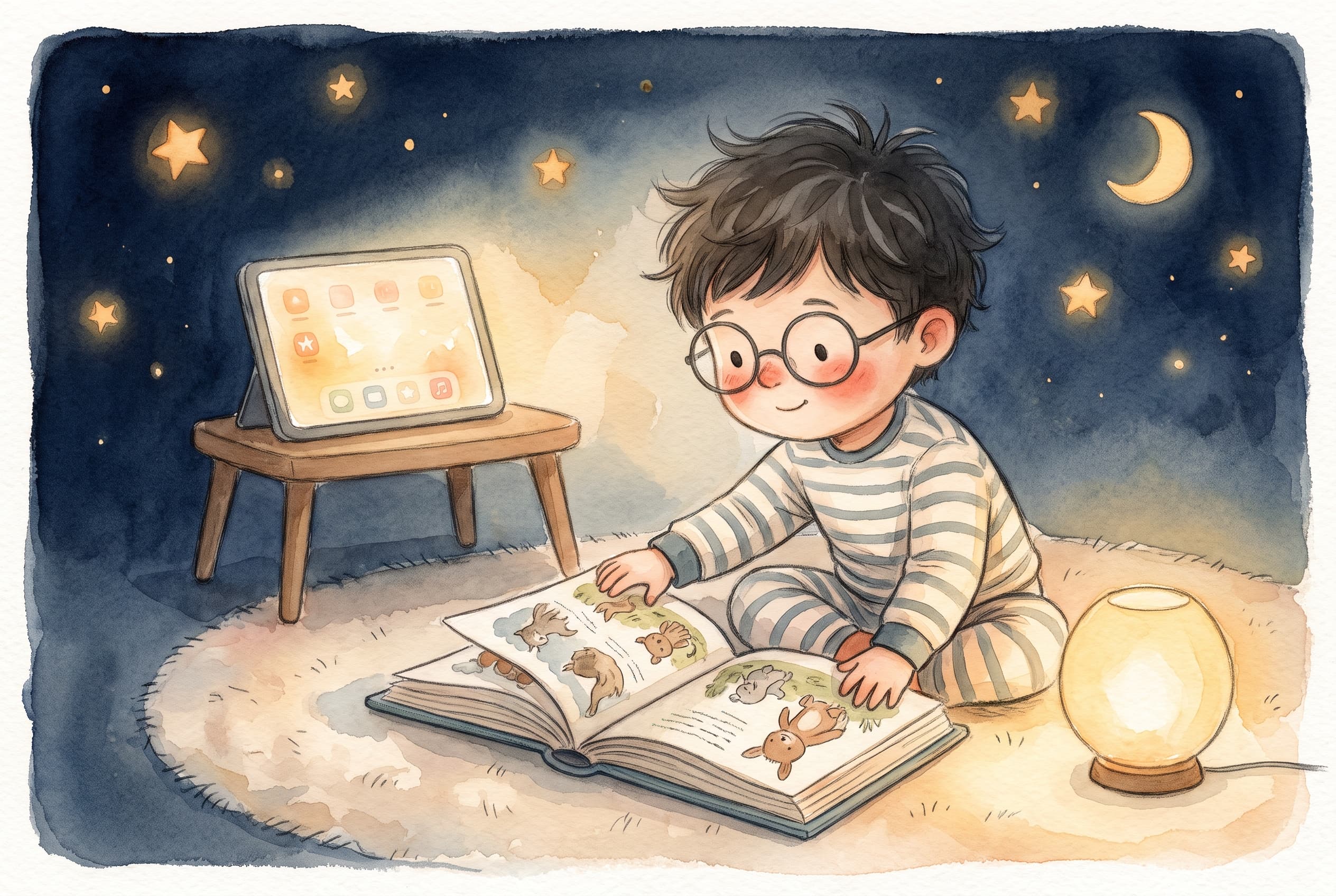
If you've ever wondered whether a bedtime story on a tablet "counts" the same as a paperback, you're asking a good question. The debate over digital vs printed books for kids isn't about picking a winner — it's about knowing what each format does well and when. Here's what the research actually shows, minus the panic and the hype, so you can make calm choices that fit your real life.
What the research says about digital vs printed books for kids
Decades of reading studies point in a consistent direction: for most young children, print has a small but real edge in comprehension and recall, especially for narrative stories. A frequently cited meta-analysis of children's reading found that kids tended to understand and remember print stories slightly better than screen versions — but the gap narrowed sharply depending on how the digital book was designed.
The key word is designed. A clean e-book that mirrors a print page behaves a lot like print. An "enhanced" e-book stuffed with games, animations, and tappable noises behaves very differently — and that's where comprehension tends to drop, because the child's attention splits between the story and the bells and whistles.
Why print often wins for the youngest readers
For babies, toddlers, and preschoolers, print has some quiet advantages that have nothing to do with being old-fashioned:
- Physical pages build early book skills — holding the book, turning pages, noticing it has a front and back.
- Fewer distractions mean the child stays inside the story instead of hunting for the next thing to tap.
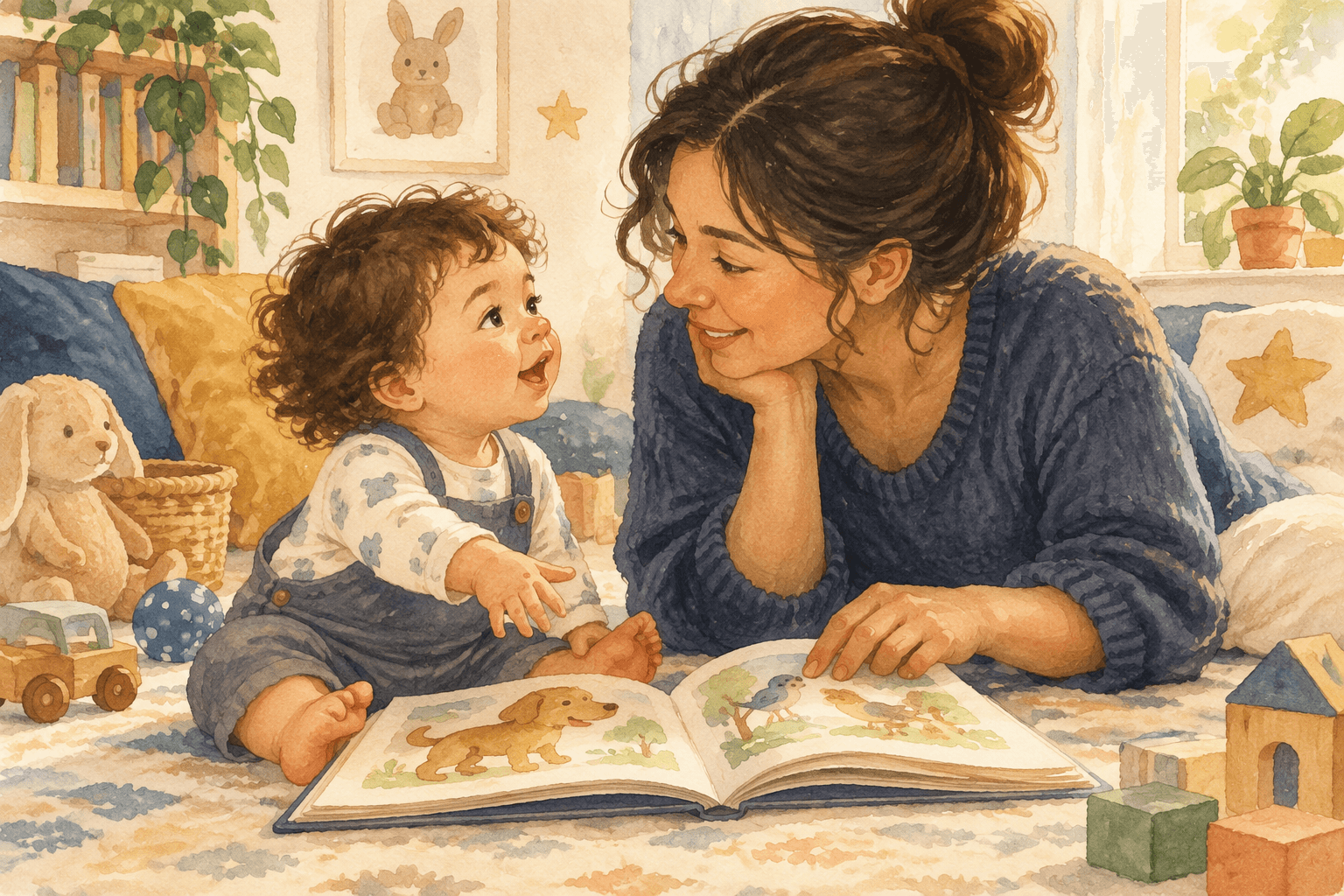
- Shared gaze is easier. You and your child look at the same still page, point at the same picture, and talk about it.
- No autoplay. The pace is set by your child's curiosity, not a device's timer.
That last point matters more than people expect. When adults read print with young kids, they naturally ask more questions and follow more rabbit trails. Interactive digital features can crowd out that back-and-forth conversation, which is where a huge amount of language learning actually happens. If you're working on talk-rich reading habits, our guide to read-aloud rituals that make story time stick pairs well with print.
Where digital books genuinely shine
Screens aren't the villain here. Used well, digital books solve real problems that print can't:
- Travel and waiting rooms, where a library in your bag beats a single heavy hardcover.
- Built-in narration for independent practice when you can't read aloud in the moment.
- Adjustable text size and read-along highlighting, which can help emerging and struggling readers.
- Instant access — a new story arrives without a trip to the store.
For a child learning to decode, a simple read-along e-book with word highlighting can be a helpful bridge. If that's your situation, pair it with the practical steps in teaching sight words at home.
Study after study finds that how an adult reads with a child matters more than whether the book is paper or pixels. A chatty, question-filled bedtime read on a tablet beats a silent, rushed print read almost every time.
The bedtime exception: screens and sleep
There's one place where print has a clear, well-supported lead: the hour before sleep. Bright, blue-rich light from phones and tablets can suppress melatonin and make it harder for kids to settle. The content itself can be stimulating too — one more tap, one more animation, one more "just a little longer."
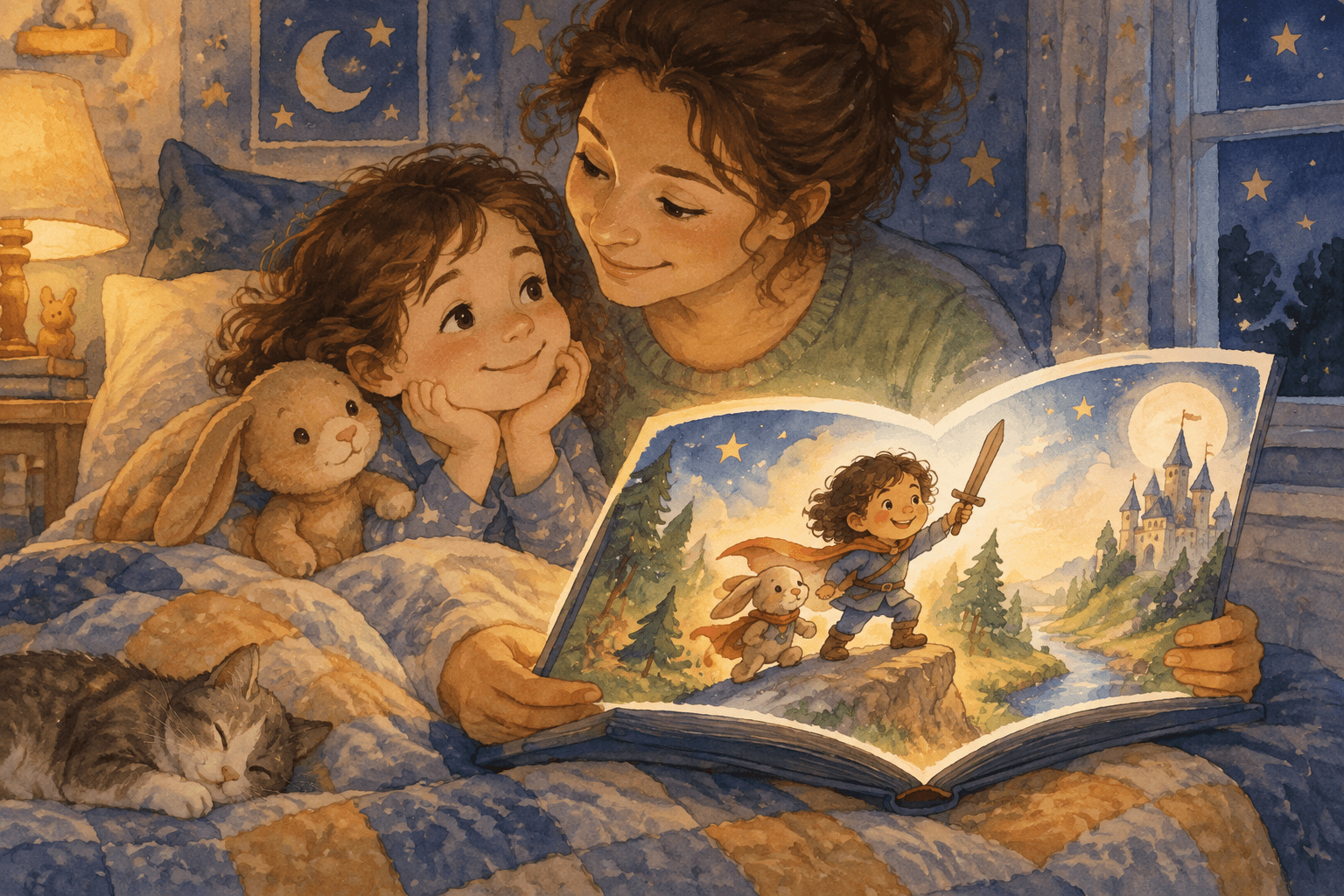
For the wind-down routine specifically, a physical book is the easier choice. It has a natural ending (the last page), no notifications, and a calm, screen-free glow-down. If bedtime is already a battle, our guide to building a bedtime routine that actually works walks through how a consistent story ritual anchors the whole evening.
A simple, no-guilt framework
You don't have to choose a side for life. Match the format to the moment:
- Bedtime and cuddle reading: print, every time it's practical.
- Travel, car trips, and waiting rooms: digital, guilt-free.
- Reading practice and decoding support: digital read-along can help.
- Keepsakes and books you want to last: print, especially hardcover.
- Previewing a story before you buy a copy: digital.
Notice that "screen time" and "reading" aren't the same conversation. A child reading an e-book is doing something very different from a child watching videos — even though both involve a screen. When you track screen time, it's worth counting reading separately.
Why personalized books lean toward print — and why we offer both
When a book is about your child — their name, their face, their adventure — it stops being just reading material and becomes a keepsake. Research on motivation is clear that kids engage more deeply with stories they see themselves in, which is one reason personalized books are worth considering for reluctant and enthusiastic readers alike.
At Hello Storybook, every story makes your child the hero of every page, and we offer the format that fits the moment: a digital version to read instantly or on the go, plus softcover and hardcover editions for the bedtime shelf and the keepsake box. You can start a personalized book and choose your format at the end — no need to decide today.
“The best book for your child is the one you'll actually read together, on the shelf or on the screen.”
— Hello Storybook
The bottom line
Print has a modest comprehension edge and a real bedtime advantage; digital wins on convenience, accessibility, and reading support. Neither is "bad." The research keeps circling back to the same truth: an engaged adult, reading with and talking to a child, is the ingredient that matters most — whatever the pages are made of.
Key takeaways
- Research gives print a small comprehension edge, mostly because digital books with games and animations split a child's attention.
- How you read — chatting, questioning, pointing — matters more than paper versus screen.
- Reserve print for bedtime, when screen light and stimulation can disrupt sleep.
- Match format to moment: print for keepsakes and cuddles, digital for travel, practice, and convenience.
Frequently asked questions
Are printed books better than digital books for kids?+
For young children, print has a small but consistent edge in comprehension and recall, and a clear advantage at bedtime because screens can disrupt sleep. But well-designed digital books work nearly as well, and how an adult reads with the child matters more than the format itself.
Do e-books hurt reading comprehension in children?+
Not inherently. Plain e-books that mirror a print page support comprehension similarly to print. Comprehension tends to drop with 'enhanced' e-books full of games and animations, because those features pull attention away from the story.
Should I avoid screens for bedtime stories?+
For the hour before sleep, a physical book is the safer choice. Blue-rich screen light can suppress melatonin, and interactive features can overstimulate. If you use a device at bedtime, pick a calm, static read-along and dim the brightness.
Written by The Hello Storybook Team, Parents, writers & storytellers.
← All stories