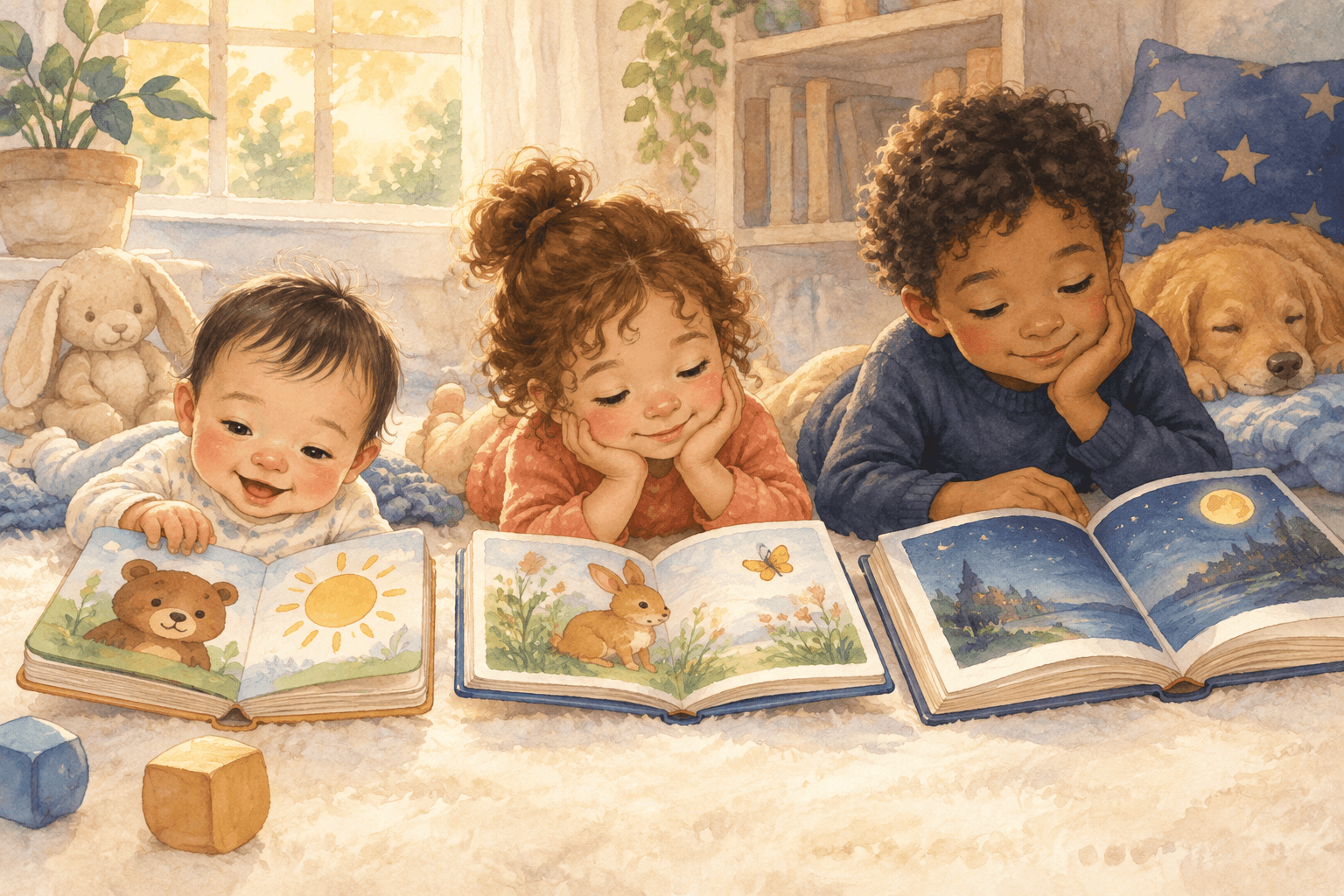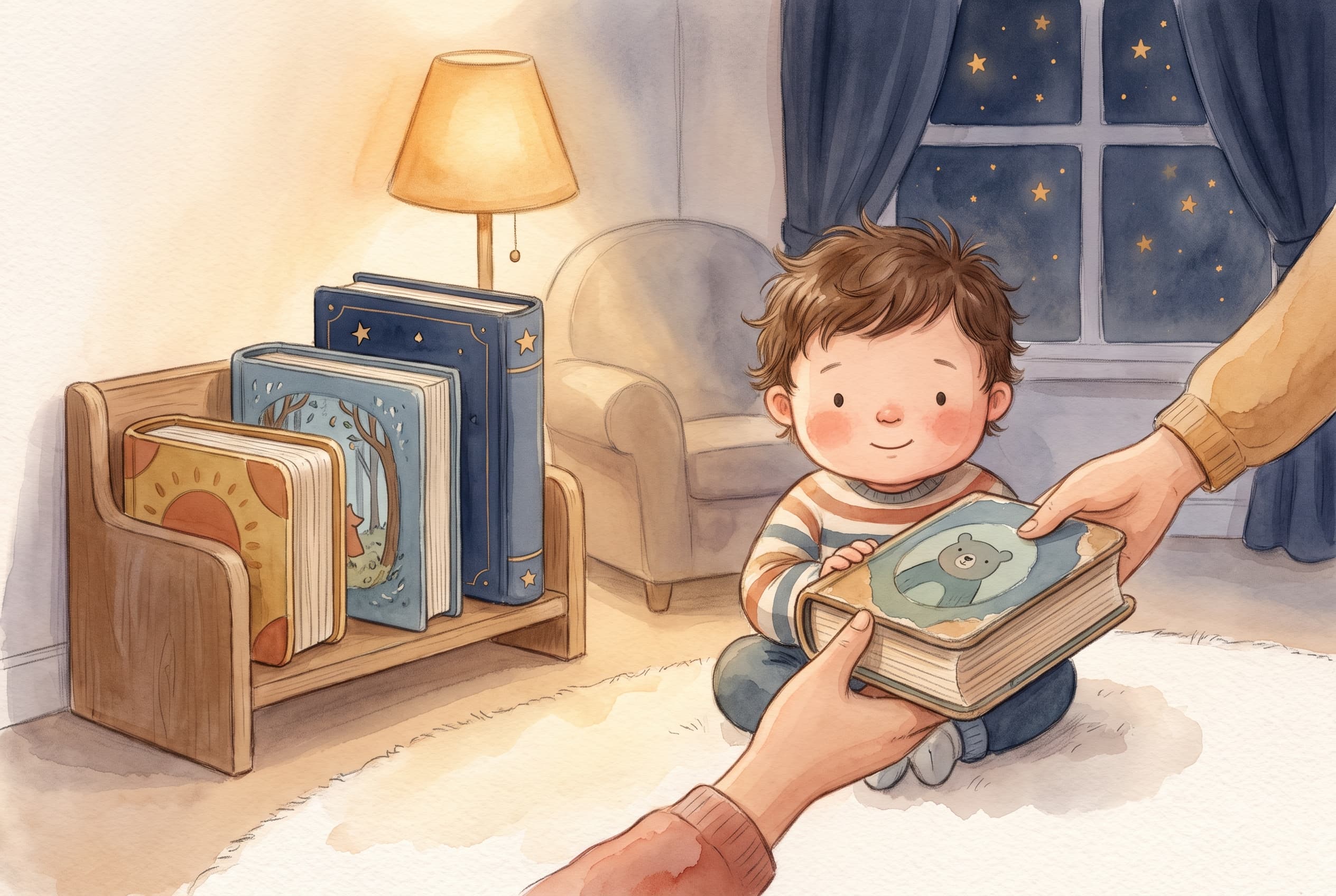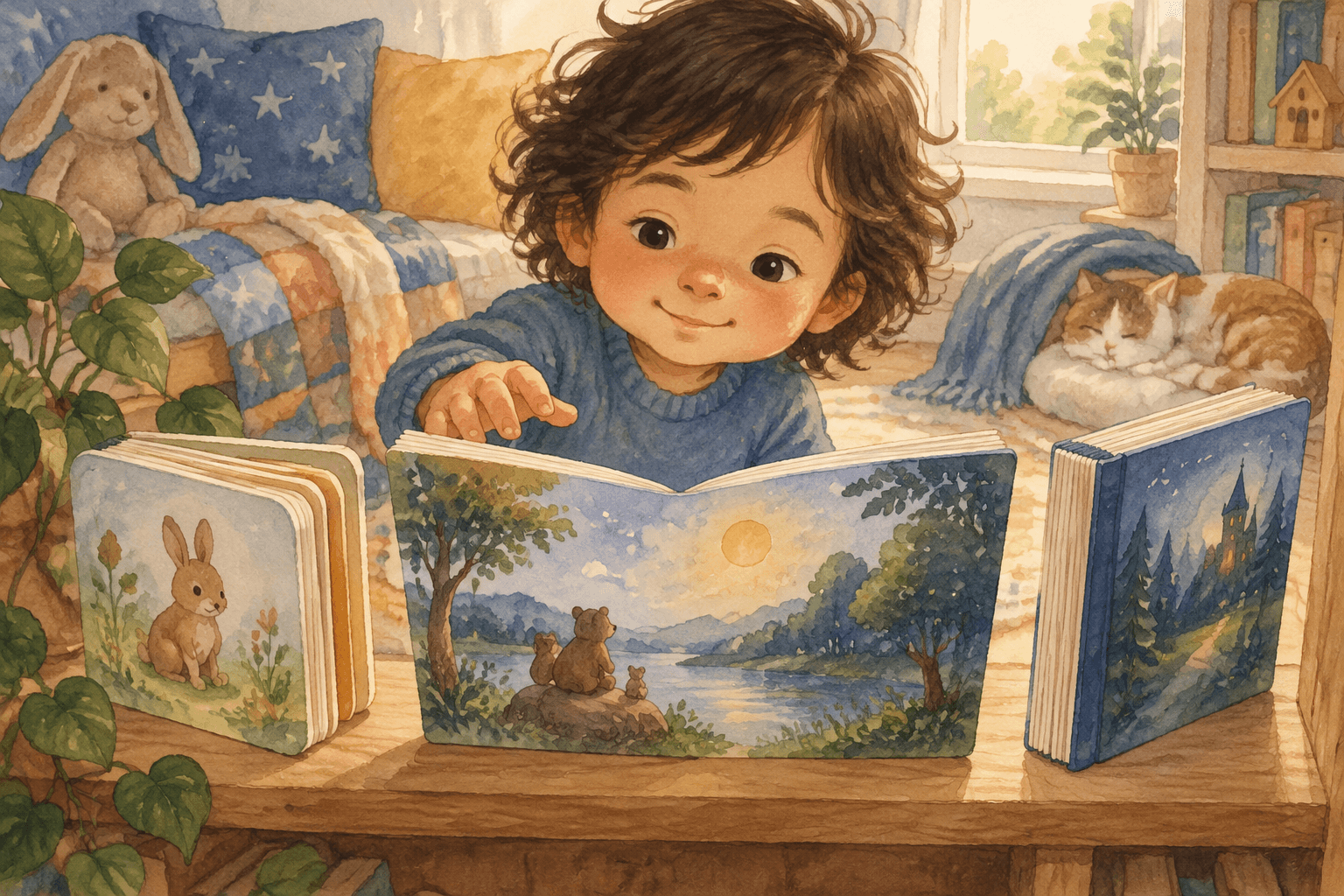
Standing in the bookstore aisle, format matters more than you'd think. The question of board vs picture vs chapter book age isn't really about reading level alone — it's about little hands, attention spans, and where your child is right now. This guide walks through each format, the ages they tend to fit, and how to tell when it's time to move up.
Why format matters as much as content
A book's physical shape is a signal. Thick cardboard pages invite a one-year-old to turn them without tearing. A wide picture book spread rewards a three-year-old who wants to point and linger. A slim chapter book with a few illustrations tells a seven-year-old, gently, that the story now lives mostly in words. Match the format to the child and reading feels effortless. Mismatch it and even a great story can frustrate.
Ages below are guides, not rules. Kids overlap formats constantly — and the best home library has all three at once.
Board books: roughly 0 to 3 years
Board books are built for survival. Sturdy pages, rounded corners, and a size small hands can grip. At this age, reading is a sensory, physical act as much as a narrative one — babies chew corners, toddlers slam pages shut, everyone points at the dog.
Look for board books with:
- Simple, high-contrast pictures and one idea per page
- Rhyme, repetition, and sounds to imitate
- Short text — a sentence or less per spread
- Interactive flaps or textures for older toddlers
Don't worry about finishing them in order or at all. If your toddler wants the same three pages twelve times, that repetition is the learning. If you're wondering whether your little one's language is on track, our guide on whether a quiet toddler is a late talker may ease your mind.
Picture books: roughly 3 to 7 years
This is the golden age of story time. Picture books pair full illustrations with richer language, and they can carry real emotional weight — a lost toy, a first day, a big feeling named out loud. The pictures do half the storytelling, which lets the text reach beyond what a child could read alone.
Picture books are meant to be read aloud, often well past the age a child can technically read them. A five-year-old who sounds out early readers still benefits from hearing a parent read a more complex picture book — that gap between listening level and reading level is exactly where vocabulary grows. Our read-aloud tips for turning story time into a ritual go deeper here.
Children can understand stories years above their own reading level. Keep reading rich picture books aloud even after your child reads independently — it builds vocabulary and keeps reading joyful, not just a task.
Early readers: the bridge around 5 to 8
Between picture books and chapter books sits a quiet, important category: early or leveled readers. These use controlled vocabulary, short sentences, and plenty of pictures so a new reader can succeed on their own. They look like small picture books but are designed for the child to read, not just hear.
If your child is starting to recognize words, early readers build the confidence that makes the leap to chapter books feel natural. For kids who resist, our thoughts on raising a reluctant reader offer gentle, low-pressure strategies.
Chapter books: roughly 6 to 10 years
Chapter books shift the balance decisively toward text. Illustrations become occasional rather than central, chapters create natural stopping points, and plots stretch across many pages. This format asks a child to hold a story in their head over time — a real cognitive milestone.
Signs your child may be ready for chapter books:
- They ask "what happens next?" and want to keep going past bedtime
- They can retell a story's main events in order
- They read early readers smoothly and want something longer
- They're drawn to series characters they can follow
Early chapter books still include spot illustrations and larger print — don't jump straight to dense middle-grade novels. And keep reading chapter books aloud together; shared reading doesn't have to end when independent reading begins.
When a child sits between stages
Most kids live in two formats at once. A four-year-old might love board books at bedtime and picture books on the couch. A seven-year-old might read chapter books alone but still want a beloved picture book read to them. That's healthy, not a step backward.
“The right book is the one your child reaches for again — regardless of what the age label on the back cover says.”
— Hello Storybook
Trust your observation over the recommended-age sticker. Watch what holds their attention, and let their interests lead the format choice.
Making the child the hero at any stage
One thing that works across every format: when a child sees themselves in the story. A personalized book that casts your child as the hero can be made as a sturdy board book for a toddler, a classic picture book for a preschooler, or a keepsake for an early reader. Seeing their own name and face on the page turns a reluctant reader into an eager one — and gives you a format that grows alongside them. Browse our sample books to see how the same story adapts to different ages.
Whatever you choose, the format is just the vehicle. The goal is the same at every age: a child who associates books with closeness, curiosity, and delight.
Key takeaways
- Board books (0–3) are built for little hands; picture books (3–7) pair rich language with illustrations; chapter books (6–10) shift the story into words.
- Keep reading aloud above your child's reading level — their listening comprehension runs years ahead and builds vocabulary.
- Early readers bridge picture and chapter books; don't rush straight to dense novels.
- Let interest and attention, not the age sticker, guide which format your child reaches for.
- Children usually enjoy two formats at once — that overlap is normal and healthy.
Frequently asked questions
At what age do kids move from picture books to chapter books?+
Most children begin chapter books between ages 6 and 8, once they can read early readers smoothly and retell a story's events in order. Start with early chapter books that still have spot illustrations and larger print, and keep reading picture books aloud alongside them.
Are board books only for babies?+
Board books suit roughly ages 0 to 3 because their sturdy pages survive little hands, but older toddlers enjoy interactive board books with flaps and textures too. Once a child turns paper pages gently and wants longer stories, picture books become a better fit.
Should I stop reading aloud once my child reads on their own?+
No. Children understand stories well above their own reading level, so reading richer picture and chapter books aloud keeps building vocabulary and comprehension. Shared reading also protects the closeness and joy of story time long after independent reading begins.
Written by The Hello Storybook Team, Parents, writers & storytellers.
← All stories