Standing in front of a shelf of children's books — or a scrolling wall of them online — it's surprisingly hard to know what will actually land. Too simple and a child loses interest; too advanced and story time turns into a wrestling match. Learning how to choose a children's book by age and reading level takes the guesswork out of it, so the book you pick meets your child exactly where they are. Here's a warm, practical age-by-age guide from one parent to another.
Why age and reading level aren't the same thing
It's easy to treat "age 4" as a single setting, but two four-year-olds can be worlds apart. One might sit for a long story with lots of text; another wants three words a page and a flap to lift. Age gives you a starting zone. Reading level — and, just as important, attention span and interests — fine-tunes it.
There are really two questions hiding inside "is this book right for my child?" The first is: can they follow and enjoy it as a listener? The second, once they're reading themselves, is: can they actually decode the words? A book can be a perfect read-aloud years before a child could read it alone. Keep those two tracks separate and choosing gets much easier.
How to choose a children's book by age: a stage-by-stage map
Use these bands as flexible guides, not rules. Watch your child, not the number on the back cover.
- 0–18 months: Board books with high-contrast images, faces, and one idea per page. Sturdy enough to be chewed. Rhythm and repetition matter more than plot.
- 18 months–3 years: Simple picture books, touch-and-feel, and lift-the-flap. Look for predictable, repeating lines your toddler can "read" back to you. Stories about daily routines land well.
- 3–5 years: Richer picture books with a real beginning, middle, and end. Kids this age love silly humor, big feelings, and characters facing small problems. Longer text is fine as a read-aloud.
- 5–7 years: Early readers and first chapter books with short sentences, decodable words, and pictures on most pages. This is the bridge from listening to reading independently.
- 7–10 years: Chapter books with fuller plots and fewer illustrations. Let interest lead — a child who loves dinosaurs will push past their comfort level for the right topic.
Match the reading level, not just the age
Once a child is starting to read, a quick check keeps you from picking something frustrating. The classic "five finger rule" still works: open to a page and have your child read it. Hold up a finger for each word they can't get. Five or more on one page usually means the book is a solo read for later — but a great one to share aloud now.
If you're actively building reading skills at home, pair story time with targeted practice. Our guides on teaching sight words at home and how to teach your child to read at home pair naturally with choosing books that grow alongside them.
Read one page aloud yourself. If you naturally want to slow down, point, or ask "what do you think happens next?", it's a strong fit for that age. If you're skimming to get to the end, it's probably too long for now.
Let interest do the heavy lifting
Reading level tells you what a child can manage; interest tells you what they'll choose. A slightly "hard" book about trucks, space, or a favorite animal will hold a child far longer than a perfectly leveled book on a topic they don't care about. When in doubt, follow the obsession.
This is also why representation matters — kids lean in when they see themselves and their world on the page. If a child rarely finds characters who look like them or live like them, seek those books out on purpose. We wrote more about that in why representation in children's books matters.
Reading aloud above level (and why it works)
Don't be afraid to read a book that's "too old" for your child to read alone. Listening comprehension runs years ahead of decoding, which means read-alouds are where kids meet bigger words, longer stories, and richer ideas. A four-year-old can love a story they couldn't read for years.
“Children can listen and understand stories well above the level they can read themselves — which is exactly why reading aloud stretches them.”
— A principle worth remembering when a book feels a touch ambitious
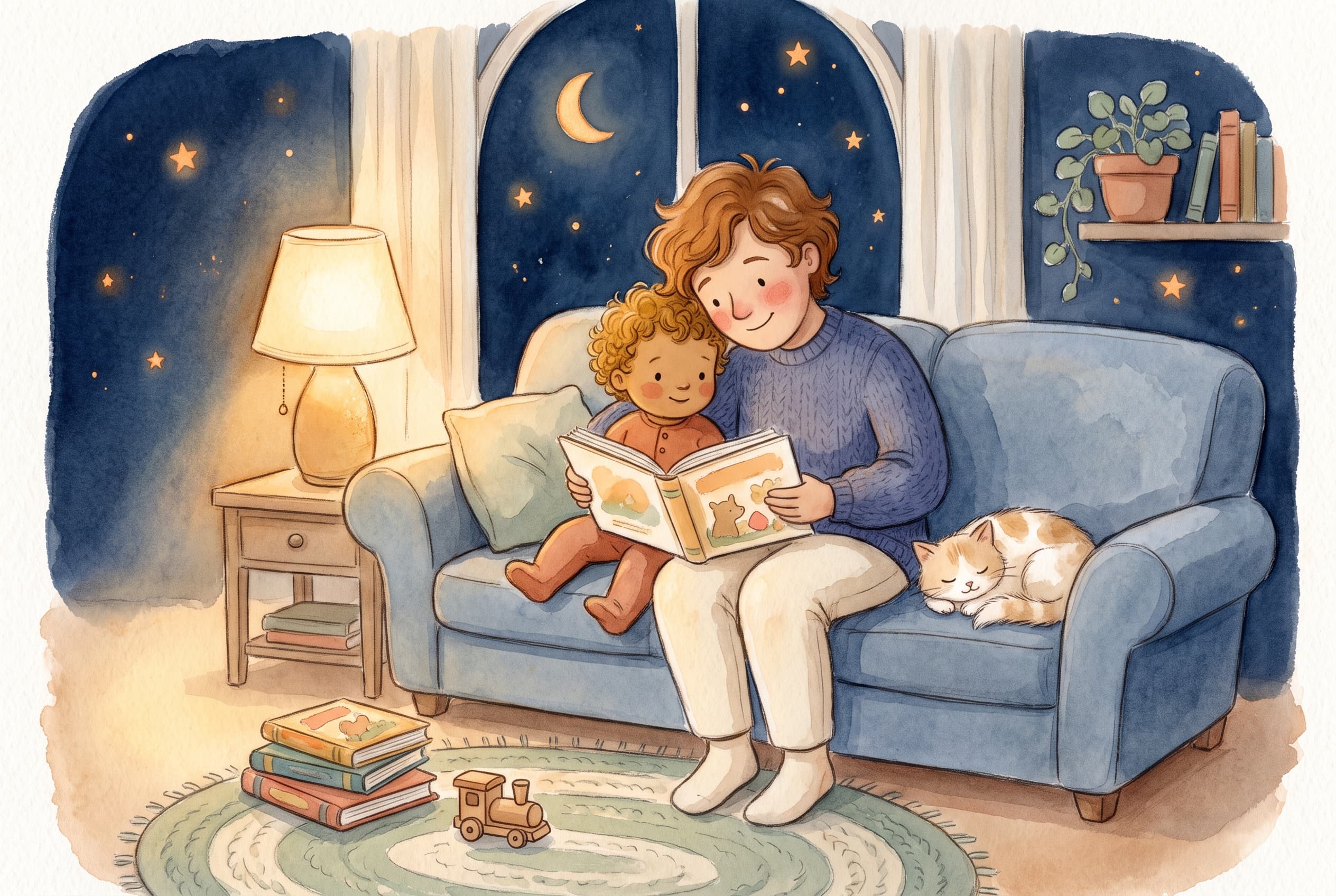
To get the most from it, small rituals help: cozy spot, same time each night, plenty of pausing to talk. Our read-aloud tips that turn story time into a ritual go deeper if you want to build the habit.
Choosing books as gifts when you don't know the child well
Buying for a niece, a friend's kid, or a birthday party guest is trickier — you can't watch their reactions. A few safe strategies:
- Aim slightly young rather than slightly old; a book that's a little easy still gets read, while one that's too hard often gets shelved.
- Choose read-aloud picture books for anyone under 6 — they suit a wider range of abilities.
- Ask about interests, not reading level: "Is she into anything right now?" tells you more than an age.
- When truly unsure, pick a book the child can grow into and enjoy on multiple levels.
When one book fits an unusually wide range: personalized stories
There's one category that gracefully spans several of these stages at once: a personalized book where your child is the hero. Because the child recognizes themselves on every page, engagement stays high even when the text is a stretch — and the same book works as a lap read for a toddler and a proud solo read a year later. At Hello Storybook, you can tailor the story to a child's age and the moment they're in, from first words to early chapter confidence. Browse our sample books to see how the same idea reads at different levels.
Wondering whether a custom book is worth it compared to a shelf classic? Our honest take is in are personalized books worth it.
Key signs you picked the right book
You'll know quickly. The right book gets requested again ("read it again!"), sparks questions, or gets "read" back to you from memory. If a book consistently gets abandoned, it isn't a failure — it's just information. Set it aside and try again in a few months. Reading levels move fast at this age.
Key takeaways
- Age gives you a starting zone; reading level, attention span, and interest fine-tune the choice.
- Separate "can they enjoy it as a listener?" from "can they read it themselves?" — a book can be perfect to read aloud years before a child reads it alone.
- Interest beats precision: a slightly hard book on a beloved topic outlasts a perfectly leveled one they don't care about.
- When gifting, aim slightly young and ask about interests rather than reading level.
Frequently asked questions
How do I know what reading level my child is at?+
Use the five finger rule: have your child read a page and raise a finger for each unknown word. Zero to one means it's an easy solo read, two to four is a good practice level, and five or more means it's better as a read-aloud for now.
Is it okay to read books above my child's reading level?+
Yes. Children understand stories well above what they can decode themselves, so reading aloud above level exposes them to richer vocabulary and longer plots. Just keep the length manageable for their attention span.
What kind of book should I buy as a gift if I don't know the child's level?+
Aim slightly young rather than old, and choose a read-aloud picture book for any child under six, since those suit the widest range of abilities. Asking about the child's current interests helps more than knowing their exact reading level.
Written by The Hello Storybook Team, Parents, writers & storytellers.
← All stories