If you have a reluctant reader and your child hates reading, you are not failing and neither are they. "I hate reading" is almost never the whole truth. Underneath it is usually something more specific: it's too hard, it's boring, it feels like a test, or it's stealing time from something more fun. The good news is that each of those reasons has a different, workable fix. This guide walks through how to find the real reason and turn the whole thing around — gently, without a power struggle.
"I hate reading" is a symptom, not a diagnosis
Kids rarely hate the actual act of understanding a story. What they hate is the feeling that comes with it. When reading is a source of frustration, embarrassment, or boredom, the brain files the whole activity under "avoid." Your job isn't to argue them out of the feeling — it's to figure out which feeling it is.
Listen for the difference between these three complaints, because they point to different problems:
- "It's too hard / the words are too long" — a skill or decoding gap.
- "It's boring" — a content and choice problem.
- "I don't want to, I want to play" — a competition-for-time problem, often made worse by screens.
- "I'm bad at it" — a confidence wound, usually from being corrected too often.
Once you know which one you're dealing with, you stop throwing random solutions at it. A bored child doesn't need phonics practice. A struggling decoder doesn't need more interesting books they still can't read alone.
Rule out the skill gap first
If reading is genuinely hard, no amount of enthusiasm will make it fun — it's like being told to enjoy a hike with a rock in your shoe. A child who is working so hard to sound out each word has no mental energy left to enjoy the story.
A quick home check: hand your child a page from a book they're "supposed" to be able to read. If they miss more than about one word in twenty, the book is too hard for independent reading, full stop. That's not a motivation problem. Drop the difficulty without comment and watch what happens. You can keep building the underlying skills through low-pressure routines at home — our guides on teaching your child to read at home and teaching sight words at home break this down step by step.
If a book has more than a handful of tripping-point words per page, it's a read-aloud book or a too-hard book — not something to make your child grind through alone. Save their solo reading for books that feel almost easy. Confidence grows on easy wins.
Separate "reading to learn" from "reading for joy"
School reading is often assessment in disguise: read this, now answer questions, now get it right. If that's your child's only experience of books, of course they associate reading with pressure. Home reading has to feel like the opposite — no quizzes, no corrections, no "what does that word mean?" mid-sentence.
For a stretch of time, let books be purely for pleasure. Don't test comprehension. Don't correct every mispronunciation. If they say "horse" instead of "house," let it ride unless the meaning breaks. Your silence tells them reading is safe here.
Let them choose — even if the choice horrifies you
Reluctant readers come alive when they get to pick. Comic books, graphic novels, joke books, nonfiction about sharks or trucks or disgusting facts, the same book forty times — all of it counts. Reading is reading. A child who devours a Dog Man book is reading more words than a child slogging unhappily through a "proper" chapter book.
Follow the obsession. If your kid loves dinosaurs, get the dinosaur encyclopedia. If they love a video game, there's probably a book about it. Interest is the single strongest motivator you have, so stop fighting it and start feeding it. Matching books to both interest and reading level matters too — our post on how to choose a children's book by age can help you aim right.
Keep reading aloud, long past when you think you should stop
Reading aloud to a reluctant reader isn't babying them — it's keeping the door open. When you read, they get the whole joy of story without any of the decoding labor. They remember that books are good. Many parents quit read-aloud time the moment a child can technically read alone, and that's exactly backwards for a kid who's already lukewarm.
Make it a ritual, not a chore: same cozy spot, same time, your full attention. If you want to make story time something they look forward to, we've gathered our best read-aloud tips that turn story time into a ritual. Stop at a cliffhanger. Do the voices. Let them turn the pages.
“The child who is read to becomes the adult who reads. Fluency is built; love of reading is caught.”
— A thought to keep close on the hard days
Shrink the ask and stack small wins
If "go read" feels like a mountain, make the mountain a molehill. Ten minutes. One page you read, one page they read. A single comic. The goal right now is not reading stamina — it's rebuilding the association between books and good feelings. You can grow the time later, once the dread is gone.
- Start with books well below their frustration level so every page feels like a win.
- Read together in turns so they're never carrying the whole load alone.
- Protect ten quiet, screen-free minutes rather than demanding a long session.
- Notice effort out loud — "you figured that whole word out yourself" — not just accuracy.
- End while they still want more, so the last feeling is appetite, not relief.
If screens are the main competition, you don't have to ban them — you just need genuinely appealing alternatives. We've collected screen-free activities that build a love of reading that make books the fun option rather than the forced one.
Make your child the hero of the story
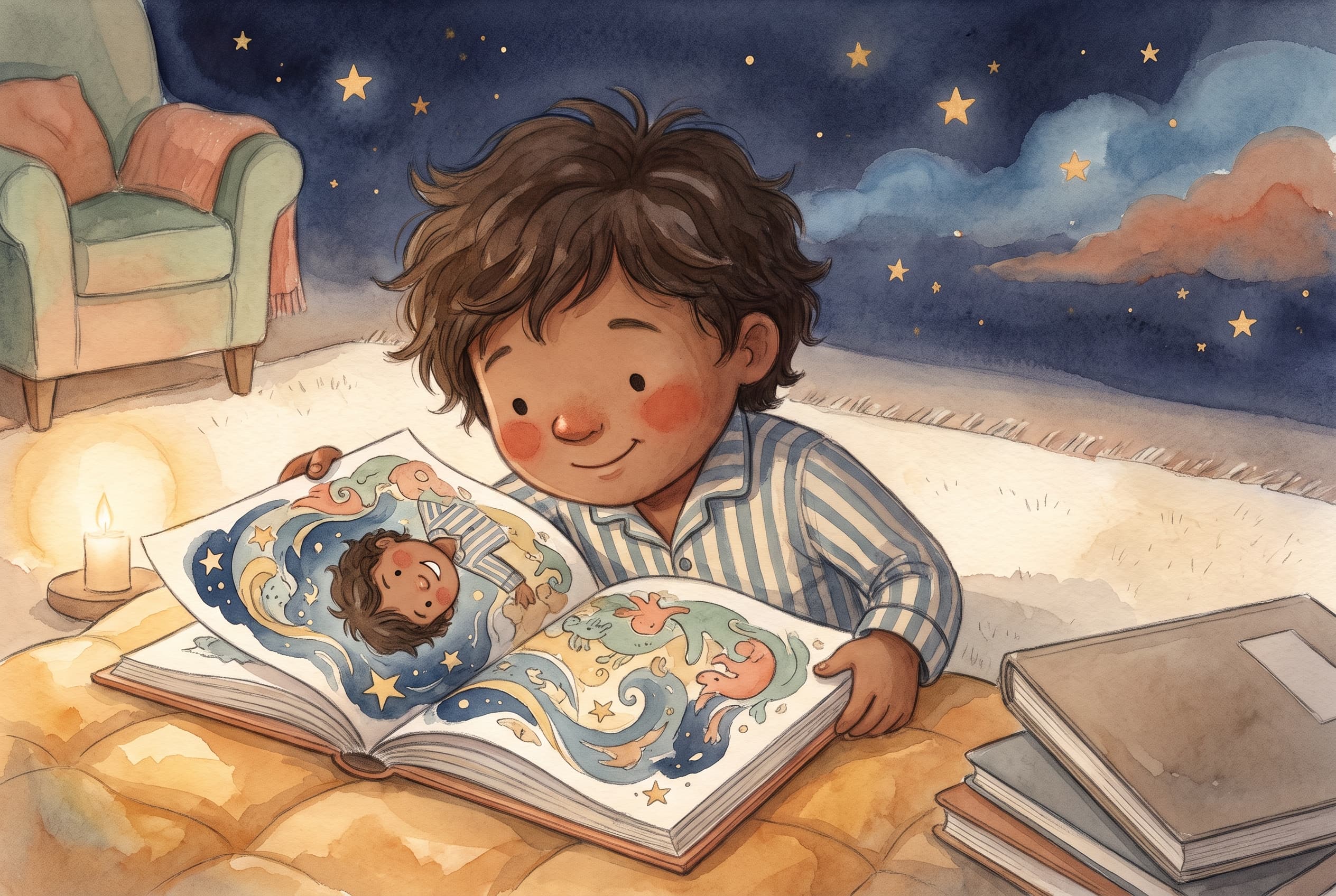
Sometimes the fastest way through "I hate reading" is to make reading feel personal. A reluctant reader who won't touch a generic picture book will often lean right in when the main character shares their name, their face, and their adventures — because suddenly the book is about them, and the stakes feel real.
This is where a personalized storybook with your child as the hero can quietly change the mood. When your child is the brave one, the funny one, the one who saves the day, they have a reason to turn the page — and re-reading their own story over and over is exactly the kind of low-pressure, high-repetition practice that builds fluency without feeling like work. You can browse a few sample personalized books to see how it reads.
Play the long game and watch your own reaction
Turning a reluctant reader around is measured in months, not days. The biggest thing you control is the emotional temperature. Sighing, correcting, bribing, and comparing all teach your child that reading is a thing they're failing at. Calm, patience, and genuine shared enjoyment teach the opposite.
Keep books visible and available, keep reading aloud, keep the pressure off, and keep letting them choose. Kids change. The child who hates reading at six is very often the one you can't drag away from a book at nine — but only if the early years didn't convince them that they're "not a reader."
Key takeaways
- "I hate reading" is a symptom — figure out whether it's a skill gap, boredom, pressure, or competition before you pick a fix.
- Rule out difficulty first: if a book is too hard to read alone, make it a read-aloud instead of a battle.
- Let your child choose what they read and keep reading aloud to them long after they can technically read solo.
- Keep the emotional temperature calm; a personal, low-pressure story your child loves to re-read builds both joy and fluency.
Frequently asked questions
Why does my child say they hate reading?+
Usually "I hate reading" means something more specific: the books are too hard to decode, the content is boring to them, reading feels like a test, or it's competing with more fun activities. Each cause has a different fix, so listen closely to figure out which one you're dealing with before changing anything.
Should I make a reluctant reader read every day?+
Yes, but keep it tiny and pressure-free — even ten minutes counts. For a reluctant reader, the goal early on is rebuilding good feelings around books, not stamina. Use easy books, read in turns, skip the comprehension quizzing, and stop while they still want more.
Do comics and graphic novels count as real reading?+
Absolutely. Comics, graphic novels, joke books, and nonfiction about a favorite topic all build vocabulary, fluency, and a love of reading. For a reluctant reader, letting them choose formats they enjoy is far more valuable than forcing "proper" chapter books they resent.
Written by The Hello Storybook Team, Parents, writers & storytellers.
← All stories