Learning how to teach a child to read at home can feel bigger than it is. You don't need a curriculum, flashcards by the hundred, or a teaching degree — you need a few short, consistent habits and a willingness to follow your child's pace. This guide walks through the real building blocks of reading, in the order they tend to click, so you can start today with whatever books you already own.
Reading isn't one skill — it's a stack of them. Kids learn to hear sounds, connect those sounds to letters, blend them into words, and then read fast enough that meaning survives. When a child stalls, it's almost always because one layer near the bottom of that stack needs more time. Knowing the order helps you meet them exactly where they are instead of pushing the next thing too soon.
Start with sounds, not letters
Before letters mean anything, your child needs to hear that words are made of small sounds. This is called phonological awareness, and it's the single biggest predictor of easy reading. The good news: you can build it with your ears, no book required — in the car, in the bath, waiting in line.
- Clap out syllables in names: "Ol-i-vi-a" — four claps.
- Play rhyme games: "What rhymes with cat? Hat, bat, mat!"
- Stretch a word slowly: "Can you hear the first sound in sssun?"
- Blend sounds you say aloud: "/m/ /a/ /p/ — what word?"
Ten playful minutes a day here pays off more than any worksheet. When your child can hear and pull apart sounds, letters finally have something to attach to.
Teach letter sounds before letter names
A common trip-up: kids learn the alphabet song and think reading means naming letters. But "see-ay-tee" doesn't help you read "cat." The sounds do: /c/ /a/ /t/. Teach the sound each letter makes first, and keep it short and crisp — /b/, not "buh."
Start with a handful of high-frequency letters (s, a, t, p, i, n) because they combine into lots of simple words. Point them out on cereal boxes and street signs. Aim for recognition in any order, not perfect recital of A to Z.
Blend sounds into simple words
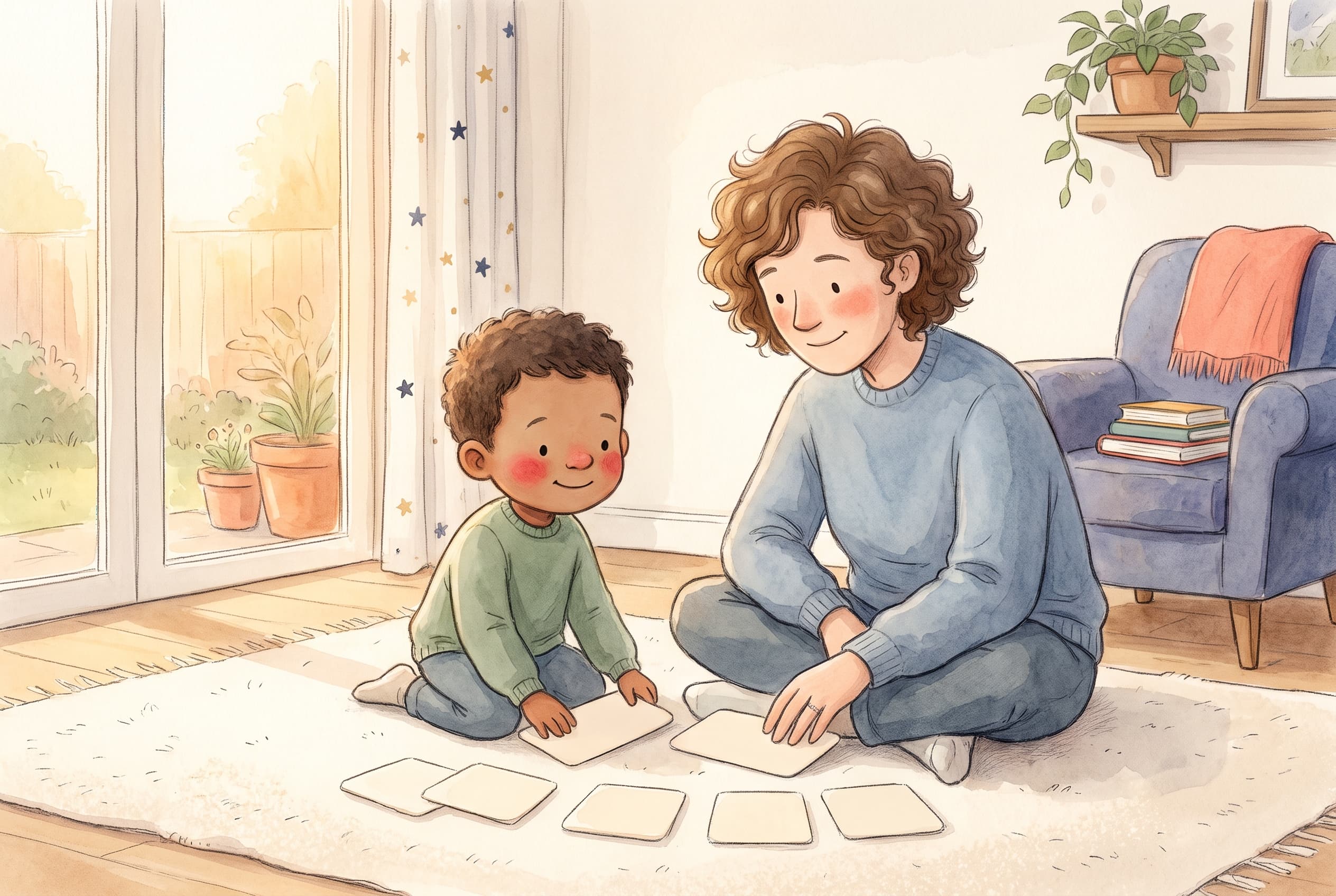
Once your child knows a few letter sounds, blending is the magic moment. Write a three-letter word like "sat," then slide your finger under each letter as you say each sound slowly, then speed up until it snaps into a word. Decodable words — ones that sound exactly like they're spelled — are your friends here: mat, pin, top, sun, bed.
Five to ten focused minutes beats a tense half hour. End on a word your child gets right, so the last feeling they have about reading is success — not struggle.
Add sight words and keep reading aloud
Some common words don't play by phonics rules — the, was, said, you. These "sight words" are worth memorizing so short sentences become readable. Introduce two or three at a time and revisit them often. Meanwhile, keep reading aloud to your child far above their own level; it grows vocabulary and shows them where all this effort is heading. Our read-aloud tips that turn story time into a ritual can make this part effortless.
Make books unavoidable (in the best way)
Kids read more when reading is woven into ordinary life, not staged as a lesson. Fill baskets with books at their level, let them choose, and don't panic over the same book twenty nights running — repetition is how fluency is built. Pairing reading with things they already love, from dinosaurs to superheroes, does more for motivation than any reward chart. For more low-pressure ideas, see screen-free activities that build a love of reading.
“Children learn to read by reading — the trick is making them want to keep going.”
— A truth every reading teacher will tell you
Handle mistakes gently and watch for real struggle
When your child misreads a word, resist the urge to jump in. Pause, point, and prompt: "Try the first sound." If they're stuck for more than a few seconds, just tell them the word and move on — momentum matters more than getting every word alone. If a child past mid-kindergarten consistently can't hear rhymes, connect letters to sounds, or shows real distress around print, mention it to their teacher or pediatrician. Early support for dyslexia and other differences is powerful, and asking early is never an overreaction.
When reading feels personal, it sticks
One of the fastest ways to hook a reluctant reader is to hand them a story where they are the main character. When their own name and face show up on the page, decoding stops being a chore and becomes a reason to keep turning pages. A personalized book from Hello Storybook puts your child at the center of the adventure — perfect for those early practice reads where motivation is everything. You can browse sample books to see how it works before you make one.
Whatever you use, remember the goal isn't to raise the earliest reader on the block. It's to raise a child who feels capable and curious around words — a feeling that outlasts any single milestone.
Key takeaways
- Reading is a stack of skills — build sounds first, then letters, then blending.
- Teach letter sounds (not names) and start with letters that combine into easy words.
- Keep sessions short, playful, and end on a win to protect motivation.
- Read aloud daily and make books part of everyday life, not a formal lesson.
Frequently asked questions
At what age can I teach my child to read at home?+
Most children are ready to start blending sounds into words between ages 4 and 6, but you can build the foundation — rhyming, hearing sounds, loving books — from toddlerhood. Follow your child's interest rather than a fixed age, and never force it.
How long should daily reading practice be?+
Five to ten minutes of focused practice is plenty for young children, ideally when they're rested and relaxed. Short, consistent sessions build skill far better than occasional long ones, and stopping while it's still fun keeps them wanting more.
Should I teach letter names or letter sounds first?+
Teach letter sounds first. Knowing that 'c' says /k/ helps a child read 'cat,' while naming the letter 'see' does not. You can layer in letter names later; the sounds are what unlock actual reading.
Written by The Hello Storybook Team, Parents, writers & storytellers.
← All stories