Every pool has that moment: your child clinging to the wall, half thrilled and half terrified, deciding whether the water is friend or foe. Learning how to teach a child to swim is less about drills and more about patience — building trust with the water one small, playful step at a time. This guide walks you through it by age and stage, with the safety habits that matter most and the encouragement that keeps swimming feeling like fun.
Start with water comfort, not swimming
Before a child can swim, they need to feel safe getting wet. Rushing straight to floating or kicking usually backfires — a scared child tenses up, which makes everything harder. Spend the first sessions simply helping your child enjoy being in the water: sitting on the steps, pouring water over their shoulders, walking along the shallow end holding your hands.
The single most useful early skill is blowing bubbles. Getting comfortable putting their face near and then into the water teaches breath control and dissolves the fear of a splash to the face. Make it a game — see who can blow the biggest bubbles, or hum a song underwater.
What to expect at each age
Readiness varies wildly, but knowing the general arc helps you set fair expectations instead of comparing your child to the confident kid two lanes over.
- Ages 1–3: Water play and comfort. Parent-and-me classes focus on splashing, holding, and short assisted floats — not independent swimming.
- Ages 3–5: Foundational skills. Blowing bubbles, floating on the back with support, kicking, and reaching the wall. Some children start basic strokes near five.
- Ages 5–7: Real swimming emerges. Combining kick, arm strokes, and breathing over short distances; learning to enter and exit safely.
- Ages 7–10: Refinement and endurance. Longer distances, cleaner strokes, treading water, and deep-end confidence.
The American Academy of Pediatrics notes most children are developmentally ready for formal swim lessons around age 4, though water-safety and comfort classes can start earlier. Follow your child, not a calendar.
A simple week-to-week progression
If you're teaching your child yourself, a loose sequence keeps sessions purposeful without turning them into pressure. Aim for short, frequent, upbeat visits over long marathons.
- Get comfortable: sit, splash, and blow bubbles until it feels easy.
- Practice front and back floats with your hands supporting, then gradually lighten your touch.
- Add kicking while you hold them — big splashy legs, straight-ish knees.
- Introduce arm reaches and 'scoops,' first standing, then floating.
- Combine kick and arms for a few strokes toward the wall or your arms.
- Work on breathing — turning or lifting the head to breathe without stopping.
- Build short independent distances, then entries, exits, and treading water.
Handle fear gently
Plenty of children go through a wary phase, and a bad early experience — a slip, a mouthful of water, a too-fast dunk — can stick. Never force a child under. Instead, name what they feel and shrink the challenge until it feels doable again. If your child is generally sensitive to loud, unfamiliar, or overwhelming situations, the same calming strategies that help with fears of dogs, thunder, and other big noises work at the pool too: predictability, gentle exposure, and lots of quiet reassurance.
“Confidence in the water is built the same way it's lost — one small experience at a time. Stack the good ones.”
— A swim instructor with 20 years poolside
Safety rules that never bend
Teaching swimming and teaching water safety are two different jobs, and the second one matters even more. Drowning is fast and silent, so layers of protection are non-negotiable regardless of skill level.
- Always supervise — designate a 'water watcher' who isn't on their phone.
- Teach children to always ask before going near water and to enter feet-first.
- Use properly fitted life jackets on boats and open water — not inflatable toys.
- Fence home pools with a self-latching gate and remove ladders from above-ground pools.
- Teach the 'reach or throw, don't go' rule for helping a struggling friend.
- Remember that swim skills reduce risk but never make a child 'drown-proof.'
Keep motivation high
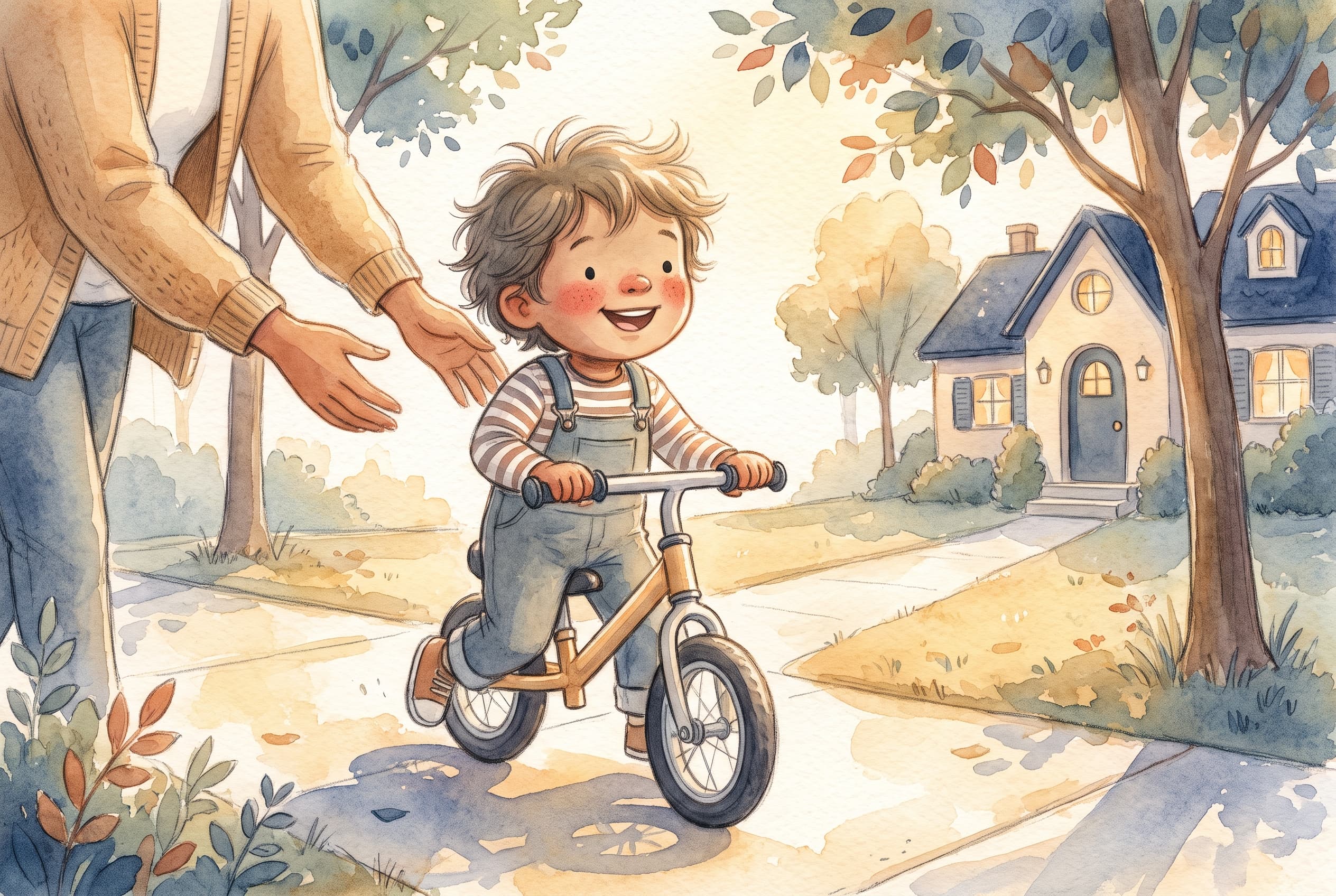
Kids repeat what feels good. Celebrate tiny wins — the first unassisted float, three whole seconds with their face in — as loudly as the big ones. End every session on a success, even a small one, so the last memory is a proud one. If you've taught your child other physical milestones, you'll recognize the rhythm; the same patient, cheer-them-on approach that works for learning to ride a bike carries straight into the pool.
Stories help too. Reading about water and adventure before a lesson primes a child to see themselves as brave and capable. A tale where they're the hero heading toward the waves makes the real pool feel like the next chapter of something exciting rather than something to fear.
Turn the milestone into a story they'll keep
When your child finally lets go of the wall and swims those first few strokes, it's a moment worth marking. A personalized adventure story from Hello Storybook lets your child star as the brave swimmer setting off across sparkling water — a keepsake that captures this exact leap of courage. Our seaside sample, Where the Wild Waves Go, is a favorite for little ones building water confidence, and reading it together makes the pool feel like home.
Key takeaways
- Build comfort with the water — especially blowing bubbles — before teaching any strokes.
- Match your expectations to your child's age and readiness, not to other kids.
- Never skip layered safety: supervision, life jackets, fencing, and clear rules.
- End every session on a win to keep swimming feeling joyful and worth repeating.
Frequently asked questions
At what age can you teach a child to swim?+
Most children are developmentally ready for formal swim lessons around age 4, though water-comfort and parent-and-me classes can start as early as age 1. Focus on comfort and safety first, and let your child's readiness guide the pace rather than a fixed age.
How do I teach a child who is afraid of the water?+
Go slowly and never force them under. Start on the steps with splashing and bubble-blowing, name their feelings, and shrink each challenge until it feels doable. Keep sessions short, upbeat, and always end on a small success to rebuild trust.
How long does it take a child to learn to swim?+
It varies widely. With regular, positive practice, many children swim short distances independently within a few months of consistent lessons, but true confidence and endurance develop over one to two years. Frequency and enjoyment matter more than intensity.
Written by The Hello Storybook Team, Parents, writers & storytellers.
← All stories