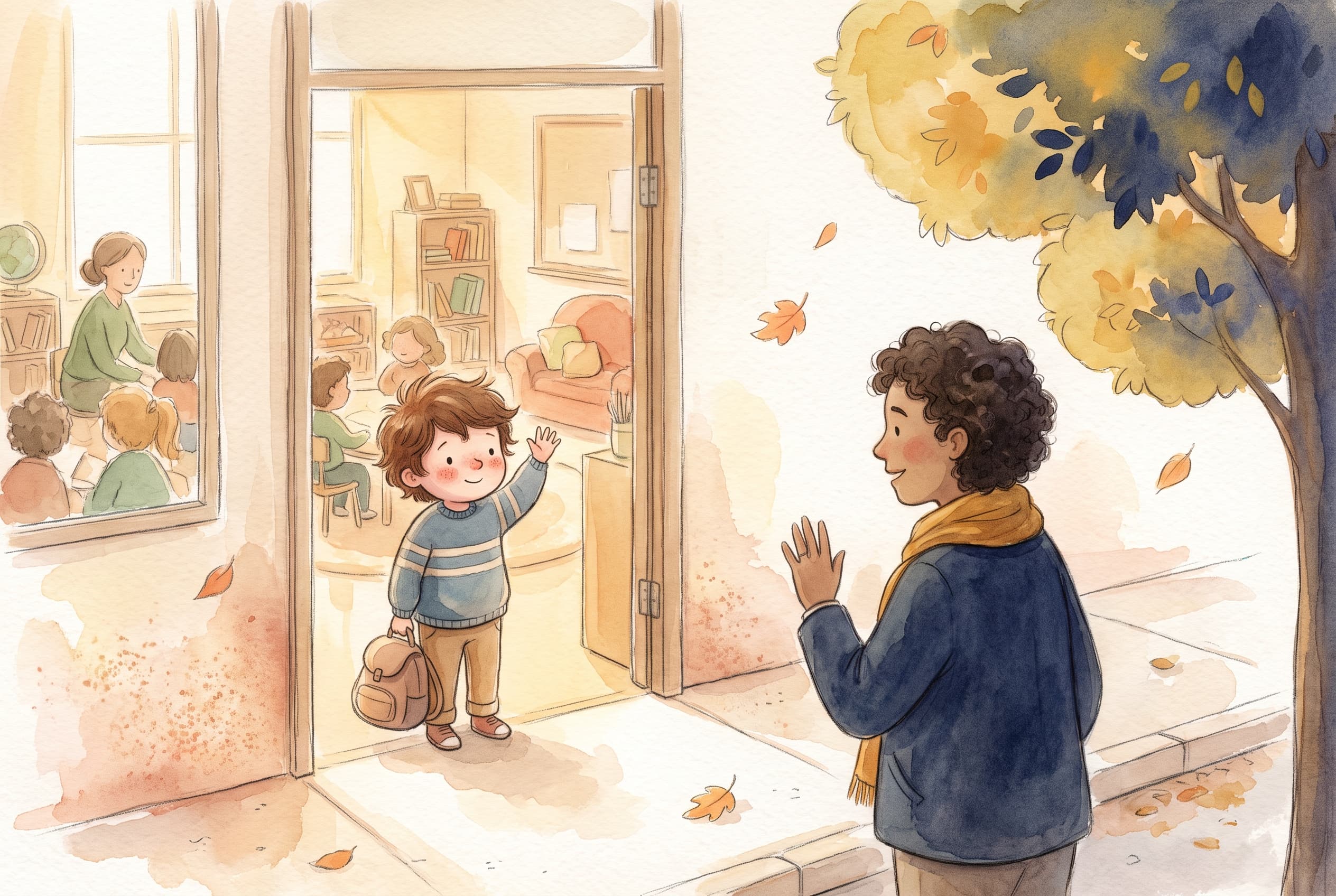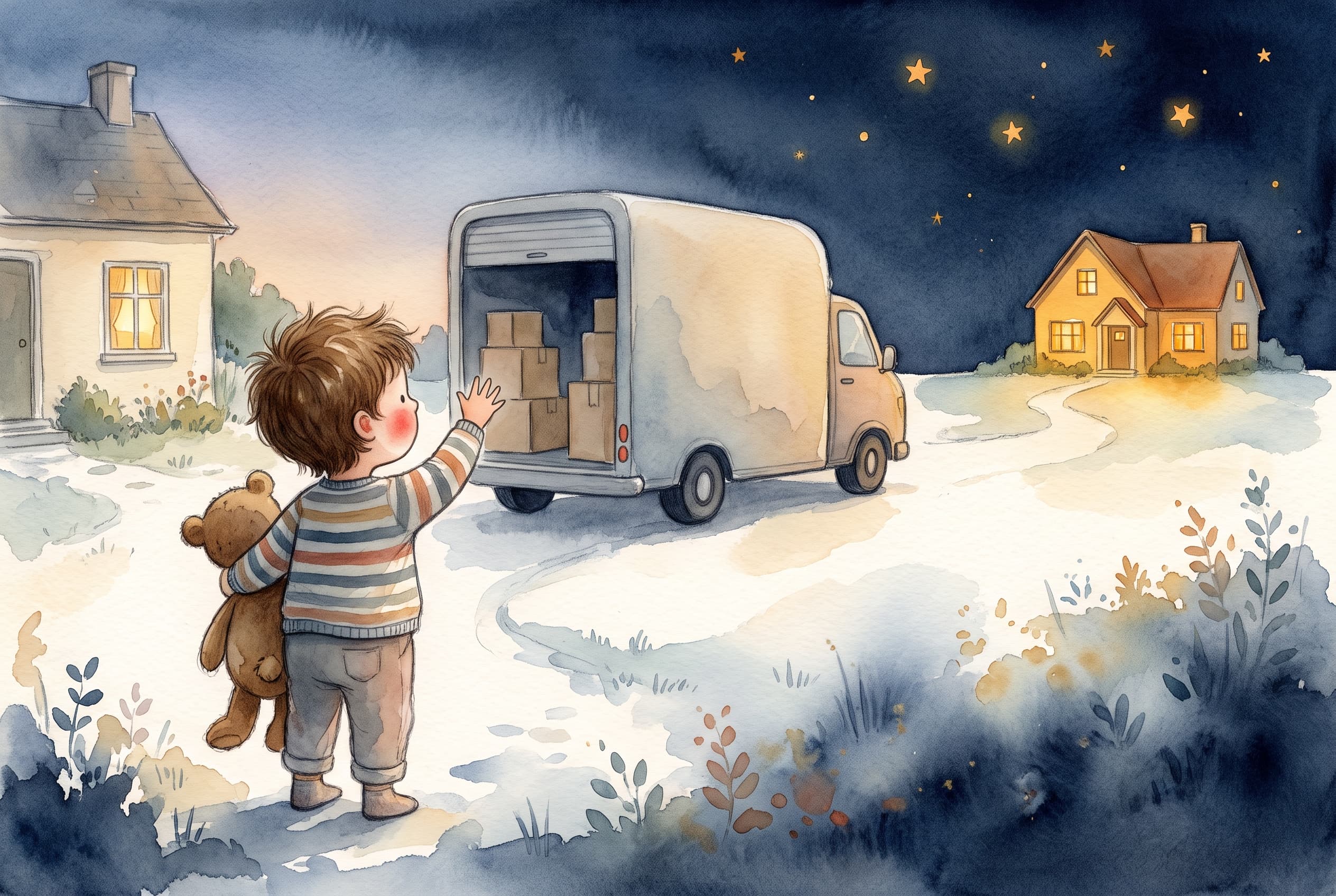
Boxes stacked in the hallway, a truck in the driveway, a bedroom stripped bare — moving is a huge upheaval for a small person who measures the world in familiar corners and known routines. If you're looking for ways to help your child cope with moving, the good news is that kids are remarkably adaptable when the adults around them stay steady and give the change a name, a story, and a shape. This guide walks through what to expect at different ages and the concrete things that actually ease the transition.
Why moving feels so big to a small child
Young children don't grieve the way we do. To an adult, a move is a logistics problem with an exciting payoff. To a four-year-old, home is the specific crack in the ceiling above their bed, the exact spot where morning light hits the kitchen floor, and the neighbor's dog they wave to every day. Losing those anchors can feel like losing safety itself.
That's why a child who has been talking happily about the 'new house' can suddenly melt down over a taped-up toy box. The abstract idea of moving is fine; the concrete experience of their world being dismantled is not. Naming that feeling out loud — 'It's hard to see your room look so different' — does more than any reassurance about the bigger backyard ever will.
What to expect at different ages
Coping looks different depending on how old your child is, and matching your approach to their stage saves everyone frustration.
- Toddlers (1–3): They read your mood more than your words. Expect clinginess, sleep disruption, and regression (potty accidents, wanting a bottle again). Keep routines identical wherever possible.
- Preschoolers (3–5): They understand more but fill gaps with imagination — some kids fear the old house will 'miss' them, or that toys left behind will be sad. Take their magical logic seriously and answer it gently.
- Early school age (5–8): They grieve friends and their known school. They want facts: How far away? Will I see my friends? What will my room look like? Concrete answers reduce anxiety more than cheerfulness.
- Older kids (8–10): Give them real agency — a say in room layout, a role in packing, a way to keep in touch with friends. Feeling powerless is the hardest part at this age.
Talk about it early, honestly, and often
Tell your child about the move as soon as it's certain, not the week before. Children handle news better with time to absorb it, and finding out from an overheard phone call breeds distrust. Use simple, true language: 'We're moving to a new house across town in the spring, after your birthday.'
Then keep the door open. Bring it up casually while doing something else — drawing, driving, bath time — so it stays a normal topic rather than a big scary announcement. If your child struggles to put words to the swirl of feelings, our guide on teaching kids to name their feelings has scripts that work well during a move.
When a child asks 'Will we bring my bed?' they're rarely asking about furniture. They're asking 'Will my world come with me?' Answer the literal question, then the emotional one: 'Yes — your bed, your blanket, your books, everything comes. The things that make it yours stay yours.'
Give them a job (and a goodbye)
Control is the antidote to anxiety. A child who helps pack a box of their own toys, labels it with a sticker, and spots that same box arriving at the new house experiences the move as something happening with them, not to them.
Just as important: a real goodbye. Rituals help children close a chapter instead of leaving it raw and open. Try a few of these:
- Walk through the empty house together and say thank you to each room out loud.
- Take a photo of your child in every favorite spot to make a little 'old house' book.
- Draw around their hand on a hidden closet wall as a secret they leave behind.
- Host a small goodbye playdate so friendships end with warmth, not a sudden gap.
- Plant something or leave a note for the next family who'll live there.
Make the new place feel like home fast
The single most stabilizing thing you can do is set up your child's room first — before the kitchen, before your own bedroom. Waking up the first morning surrounded by their own things, arranged the way they know, tells their nervous system 'you belong here' louder than any words.
Keep the comfort items unpacked and accessible during the move itself: the specific blanket, the nightlight, the three books you read every night. If bedtime falls apart in the new house — and it often does for a week or two — lean on your existing bedtime routine rather than inventing a new one. Familiarity is the whole point.
“Children don't need the change to be small. They need to feel big enough to handle it. Our job is to make them the hero of the story, not a passenger.”
— A family therapist we spoke with
Turn the move into a story your child stars in
Children process transitions through narrative. That's why 'the new adventure' framing works — but only if it's honest, holding both the excitement and the sadness. Read picture books about moving in the weeks beforehand so the topic feels familiar and survivable, and talk about how the characters felt scared and then okay.
You can take it a step further by making your child the actual hero of a moving story. A personalized book that shows your child leaving one home, feeling their real feelings, and discovering the good things about the new one gives them a script for their own experience — and a keepsake that says, unmistakably, 'you did a brave thing.' It's a gentle, screen-free way to rehearse the change before it happens and to celebrate it afterward. (Browse our sample stories to see how it works.)
Be patient with the wobble afterward
Adjustment isn't instant. Expect a few weeks of shorter fuses, unfamiliar-house nightmares, or a sudden 'I want to go home' even after the boxes are gone. This is normal grief working itself out, not a sign you made the wrong choice. Hold the routines, name the feelings, and give it time. Most children settle within a month or two — often surprising you by declaring the new place 'better' before you've finished unpacking.
Key takeaways
- Tell kids about the move early and answer the emotional question under their literal one.
- Give your child a real job in the packing and a proper goodbye ritual for the old home.
- Set up their bedroom first and keep comfort items unpacked to anchor the transition.
- Expect a wobble for a few weeks after — hold routines steady and be patient.
Frequently asked questions
How do I help my child cope with moving to a new house?+
Tell them early and honestly, involve them in packing their own things, create a goodbye ritual for the old home, and set up their bedroom first in the new place. Keep daily routines identical throughout, name their feelings out loud, and give the change a positive but honest story they can be the hero of.
How long does it take a child to adjust after a move?+
Most children settle within four to eight weeks, though toddlers and preschoolers may show clinginess, sleep disruption, or regression for a bit longer. Keeping routines consistent and being patient with short tempers or homesickness speeds the process — the wobble is normal, not a sign of a problem.
Should we move before or after a big event like a birthday or new baby?+
When you can, avoid stacking major transitions. Give a move its own space so your child can process one big change at a time. If timing forces overlap, keep the surrounding routines extra steady and lean on familiar comfort items to reduce the total load on your child.
Written by The Hello Storybook Team, Parents, writers & storytellers.
← All stories