If your sweet toddler just sank their teeth into a playmate or swung at you over a snatched toy, you are not raising a tiny villain. Toddler hitting and biting is one of the most common — and most mortifying — phases of early childhood. It happens because small children have enormous feelings and almost no tools to manage them yet. The good news: this is a skill gap, not a character flaw, and you can teach your way through it with calm, consistent responses. Here's what's really going on and what actually helps.
Why toddlers hit and bite in the first place
Hitting and biting usually peak between 18 months and 3 years — right when big emotions arrive long before the language and impulse control to handle them. A toddler who bites isn't being cruel; their developing brain simply reaches for the fastest tool available when overwhelmed.
Common triggers include:
- Frustration — a toy was taken, a tower fell, a 'no' landed hard
- Overwhelm — too much noise, too many people, an over-tired or hungry state
- Communication gaps — they can't yet say 'move,' 'mine,' or 'I need space'
- Experimentation — especially with biting, they're testing cause and effect
- Seeking connection or a big reaction, even a negative one
Teething toddlers may also bite simply because their gums ache and mouthing feels good. Knowing the 'why' behind a specific incident helps you respond to the real need instead of just the behavior.
Stay calm first — your regulation teaches theirs
The hardest and most important step: keep your own body calm. A toddler's nervous system borrows stability from yours. If you yell, grab, or spiral into shame, you add fuel to an already flooded little brain. If you stay steady, you model exactly the self-control you're trying to build.
In the heat of the moment, take one slow breath before you speak. Lower your voice instead of raising it. You can be firm and calm at the same time — in fact, that combination is what makes a boundary feel safe rather than scary.
Move between the children, get low, and say calmly: 'I won't let you bite. Biting hurts.' Short, clear, and repeated the same way every time works far better than a long lecture a toddler can't process.
What to do in the moment
Consistency matters more than cleverness. Having a predictable response means your child eventually learns what comes next — which itself reduces the behavior over time.
- Stop the hurt immediately. Calmly block the hand or gently separate the children.
- Name it simply. 'No hitting. Hitting hurts.' Keep it short.
- Tend to the hurt child first. This shows your toddler where your attention goes — toward kindness, not toward the dramatic reaction they might be seeking.
- Acknowledge the feeling behind it. 'You were so mad he took the truck.' Feelings are allowed; hurting is not.
- Offer the better tool. 'You can say stop, or come get me.' Give them the words they didn't have.
- Redirect and move on. Once it's done, it's done — no long shaming aftermath.
Avoid biting or hitting back 'to show them how it feels.' It confuses the lesson — you're demonstrating the exact thing you want to stop — and frightens rather than teaches.
Teaching better habits between the storms
The real learning happens when everyone is calm, not mid-meltdown. Think of these as the practice sessions that make the in-the-moment responses stick.
Give your child language for feelings before they boil over. Naming emotions is a skill you can coach daily — our guide to helping kids name their big emotions walks through simple ways to build that vocabulary. When a child can say 'I'm mad,' they're far less likely to bite about it.
- Read stories where characters feel frustrated and find words or ask for help
- Practice gentle hands — stroke a pet or a stuffed animal and praise the softness
- Teach one or two 'instead' moves: stomping feet, squeezing a pillow, coming to find you
- Narrate your own regulation: 'I'm frustrated, so I'm taking a deep breath'
- Catch and praise the good — 'You asked for a turn! That was so kind' goes a long way
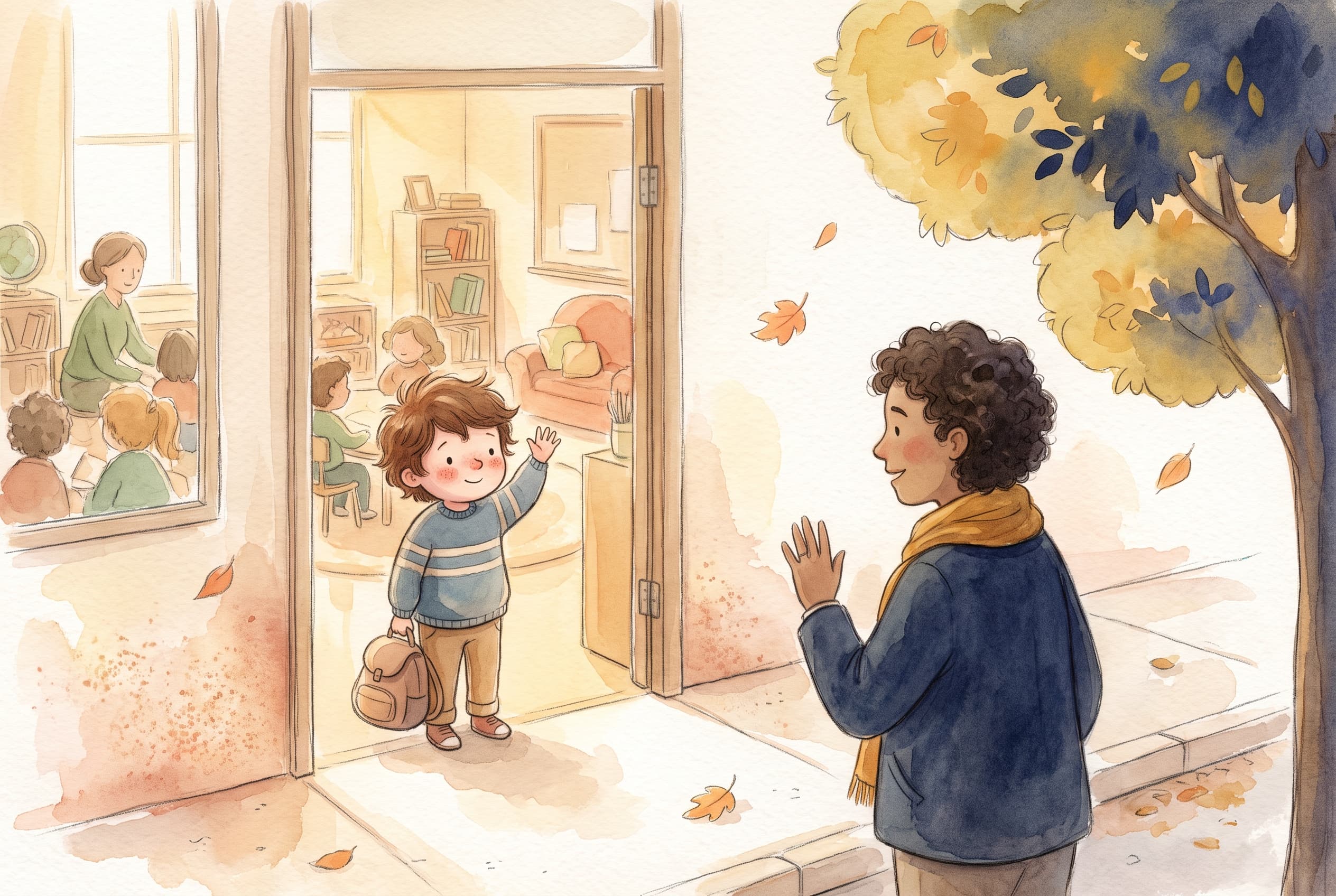
If hitting shows up around big transitions like starting daycare or a new sibling, remember the behavior is often communication about stress, not defiance. Meeting the underlying need usually calms the behavior faster than any consequence.
Preventing the next incident
Much of toddler aggression is predictable once you spot the patterns. A little detective work saves a lot of fallout.
- Track the when: before lunch? end of a long playdate? These are tired-and-hungry windows
- Keep playdates short and well-supervised during a biting phase
- Shadow closely at the spots you know are hotspots, ready to step in early
- Protect sleep and snacks — a regulated body hits and bites far less
- Prepare for transitions with warnings: 'Two more minutes, then we clean up'
This phase is temporary. With calm, consistent responses, most children outgrow hitting and biting as their language and self-control catch up — usually within a few months of steady coaching.
When a story helps the lesson land
Toddlers learn powerfully through stories, especially ones that feel like they're about them. Seeing a familiar character feel angry, pause, and choose gentle hands gives your child a script to borrow when their own feelings run high — and it opens the conversation without any heat of the moment. A personalized book about courage and big feelings that casts your child as the hero who learns to stop, breathe, and ask for help turns an abstract rule into a story they'll ask to read again and again. You can browse our sample stories to see how it works before you create one.
When to seek extra support
Occasional hitting and biting is developmentally normal. But reach out to your pediatrician if the aggression is frequent and intense beyond age 3–4, seems to come out of nowhere without a trigger, is paired with speech delays or other developmental concerns, or isn't improving at all despite months of consistent response. Getting guidance early is a sign of good parenting, not failure.
Key takeaways
- Toddler hitting and biting is a normal skill gap, not bad character — it peaks between 18 months and 3 years.
- Your calm is the lesson: respond firmly and gently, stop the hurt, and keep your words short.
- Teach better tools during calm moments — feeling words, gentle hands, and 'come get me' alternatives.
- Prevent incidents by tracking triggers, protecting sleep and snacks, and supervising closely during the phase.
Frequently asked questions
Why does my toddler hit and bite when they're not even angry?+
Young toddlers often bite or hit to explore cause and effect, to get a big reaction, or because they're over-tired, over-stimulated, or teething. It isn't always about anger — sometimes it's curiosity or a need for connection they can't yet express in words.
Should I bite my child back to show them it hurts?+
No. Biting or hitting back confuses the lesson by modeling the exact behavior you want to stop, and it frightens rather than teaches. Instead, calmly block the behavior, say 'biting hurts,' tend to the hurt person, and give your child better words to use.
At what age should toddler hitting and biting stop?+
Most children outgrow hitting and biting by around age 3 to 3.5 as language and impulse control develop, especially with calm, consistent coaching. If it's frequent, intense, and not improving by age 4, check in with your pediatrician.
Written by The Hello Storybook Team, Parents, writers & storytellers.
← All stories